Why the new Mitsubishi Pajero uses a ute platform
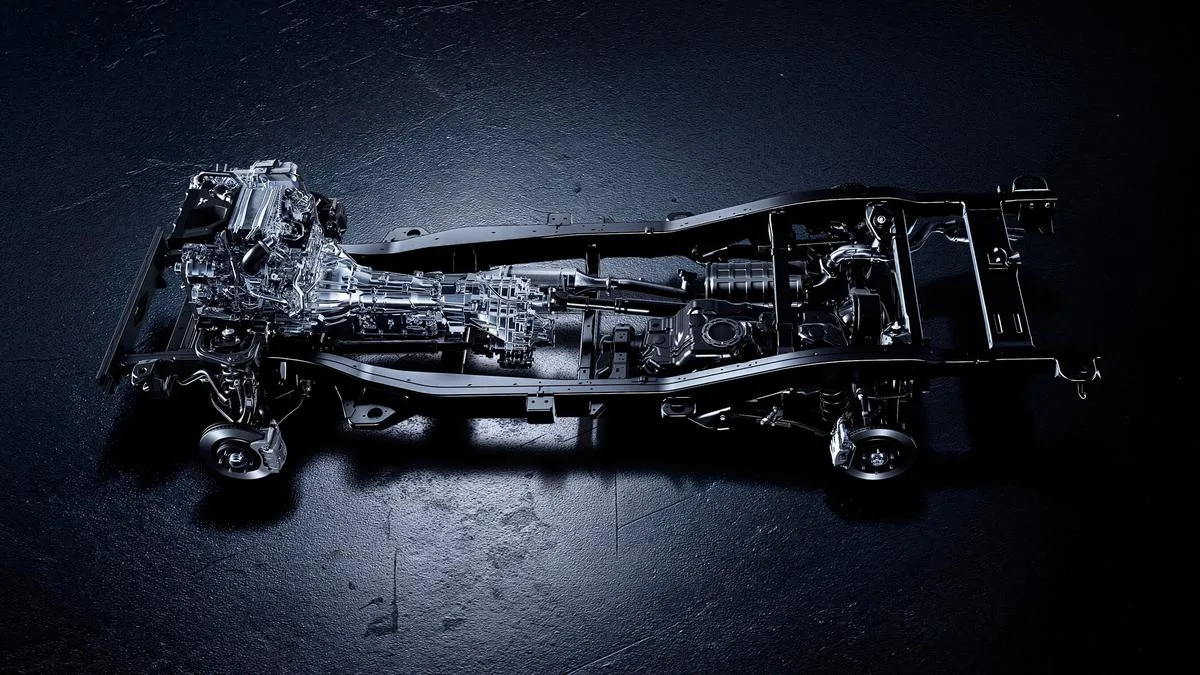
The new Mitsubishi Pajero has shifted to a ute-derived ladder-frame chassis, but the Japanese brand insists it was the right move for its newest SUV.
The 2027 Pajero is the first iteration of the nameplate to feature true ladder-frame construction in close to 30 years. That said, only the two most recent generations featured monocoque bodies with integrated ladder-frames rather than true body-on-frame construction, which was seen on the first two generations of Pajero.
Indeed, the new SUV is based on the Triton ute but with several modifications to suit the SUV application. While this sounds very similar to the now-defunct Pajero Sport , Mitsubishi's previous ute-based ladder-frame SUV, the brand has outlined several key ways in which it differs.
Mitsubishi Motors chief vehicle engineer Takaaki Matsumoto explained that adopting a ladder-frame chassis provides greater off-road capability and better captures the Pajero's multi-terrain intentions.
🚘 Don’t just read about your next car. Find a great deal with CarExpert.
"The reason why we applied the ladder frame, why we judged that the ladder frame was more suitable than the monocoque, basically the ladder frame is amazing for cross-country," he told media, including CarExpert.
"From the viewpoint of strength or durability, ladder frame has advantages over monocoque. There are customers who use our car in tough conditions; in order to ensure durability and strength, we apply the ladder frame."
The Pajero is also distinct in that it features a new five-link rear suspension setup to balance off-road capability and ride comfort, unlike the leaf-sprung Triton. It also has a shorter wheelbase, more cross-bracing, and thicker side members than Mitsubishi's ute.
Matsumoto-san went on to say that the Pajero's new construction should also mean it's more comfortable inside while on the move, while also being more fuel-efficient on account of new materials and designs.
"From the viewpoint of noise and vibration performance, the ladder frame has advantages also. The cabin is isolated from the tyres and engine by the bodywork," he said.
"[Another advantage] of the ladder frame is fuel consumption. In order to improve the fuel consumption performance, we applied high-tensile strength steel to the frame. And for example, the aluminium hood is lightweight, and the engine is improved also."
This ties into the new eight-speed transmission featured in the Pajero, up from the six-speed unit in the Triton. Matsumoto-san says this will also reduce the vehicle's fuel consumption, even though the Pajero uses a version of the ute's 2.4-litre turbo-diesel four-cylinder engine. Fuel economy figures have yet to be confirmed.
Interestingly, the new Pajero isn't the first large SUV from Mitsubishi to use an eight-speed gearbox. The Pajero Sport that came before it also had eight gears and was based on the Triton, but the Japanese brand insists that the two vehicles are not the same.
"Roughly speaking, most components are renewed from Triton. Only the front section of the ladder frame and the front floor are common with Triton, but the others are renewed or modified from the Triton," Matsumoto-san said.
5News aggregated this summary from the outlet’s public feed. The full article, with all the context, is on 7news.com.au — the content belongs to 7NEWS Australia.