Victoria moves to expand definition of ‘corruption’ before state election
Former Ibac head welcomes potential change that could capture actions that currently cannot be used to make corrupt findings
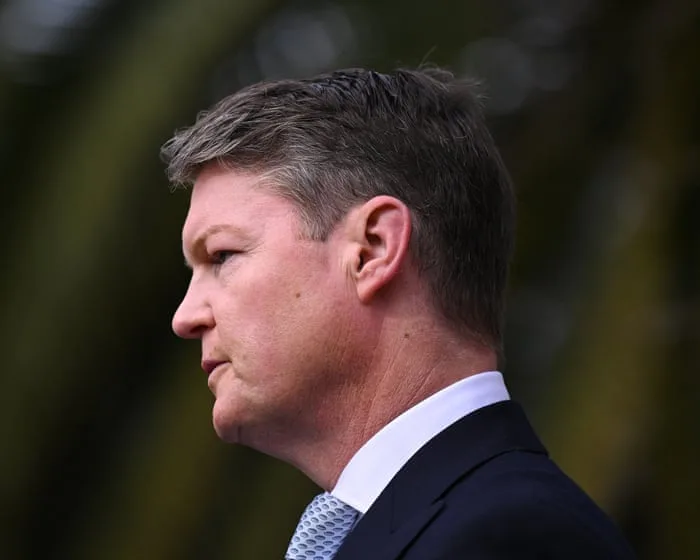
Ben Carroll has committed to changing the definition of “corruption” before the Victorian election in a move a former anti-corruption boss says could have captured the conduct of senior government figures had it been in place earlier.
The Victorian premier announced on Tuesday said it was his intention to introduce the legislation – which will expand the jurisdiction of the Independent Broad-based Anti-corruption Commission (Ibac) – before the government enters caretaker mode in November.
Carroll also said he was “very close” to releasing the terms of reference for a royal commission into the construction sector , which Guardian Australia understands could happen within days.
The Victorian parliament will sit for additional days to accommodate for the Ibac legislation and to establish a special prosecutor to work in parallel with the royal commission’s investigation.
“We are working very hard in terms of broad terms of reference to shine a light on what occurred, getting the best candidate to be commissioner,” Carroll said.
“[We are] also making sure we have lasting change [by] establishing an office for a special prosecutor and also the work the special minister of state continues to do not just on the royal commission, but giving our integrity agencies – in particular Ibac – the powers it needs and deserves.”
The special minister of state, Ingrid Stitt, said her department had been working to “bring forward” follow-the-dollar powers, allowing Ibac to investigate the spending of public money by private contractors and subcontractors, alongside a broader definition of corrupt conduct.
“The premier has been very clear that he wants these powers to be in the parliament and hopefully passed in this term of government,” Stitt said.
Currently, Ibac can only investigate suspected corruption that constitutes a relevant criminal offence. It also is unable to make findings of corrupt conduct unless the conduct constitutes a relevant criminal offence.
A parliamentary inquiry into the adequacy of Victoria’s integrity framework , tabled in December, said it received many submissions that described the threshold as too narrow, as it failed to capture “grey corruption” and other breaches of public trust.
It recommended that the threshold be changed to capture behaviour that could included committing a disciplinary offence, misconduct worthy of termination, or instances considered in breach of public trust by a public officer.
It also recommended giving Ibac the power to make and publish formal findings of corrupt conduct. The government had accepted the recommendations in principle.
The former Ibac commissioner Robert Redlich, who now chairs the Accountability Round Table, said such changes would bring Ibac jurisdiction closer to that of the NSW Independent Commission Against Corruption.
5News aggregated this summary from the outlet’s public feed. The full article, with all the context, is on www.theguardian.com — the content belongs to The Guardian Australia - Australian Politics.