I want to control my car without crashing it. Here’s where design is going wrong
Our 19-year-old microwave died recently. Its replacement has a shiny black control panel. Heating last night’s pasta now takes 10 steps – Function > Microwave. Cook Time > 1, 2, 0. Power Level > 8. Confirm. Start ! – to do what my mum’s turn-dial Panasonic did in 1982 with a single flick of the wrist.
Writer Cory Doctorow coined the term “enshittification” to describe the degradation of digital platforms when profit is put ahead of usability. But look around your kitchen, home, office or car, and you’ll realise the internet isn’t the only place where things are getting worse. We are living through the shittification of real, physical things; something I call UnDesign.
UnDesign is the TV remote that is so symmetrical you don’t know which way it points, or so small I’ve forever lost two between my sofa cushions. It’s the oven with dozens of additional features if only you knew how to find them. It’s those new headphones that sound amazing … if only you could remember the right gesture for volume. While many are high-tech, UnDesigned products can also be the power tool that burns out when building a deck, or a plastic ladle that goes floppy when serving pumpkin soup.
Not long ago, manufacturers and designers were bound by an implicit contract: products should work. Design meant solving human problems and making life simpler, safer and more intuitive. As an industrial designer, I put the user’s needs first, whether it’s a KeepCup or a mass spectrometer. While this approach is less flashy, the result is a product that does what it promises.
In critical industries, this isn’t a feel-good philosophy; it’s a legal requirement. Medical device manufacturers must demonstrate that their products can be used as intended. That means proving an emergency doctor can operate the defibrillator, or an elderly woman can measure her blood glucose at home without fatal errors. User-centred design requires rigorous observation, real-world testing and genuine empathy.
Yet today, designing something has increasingly come to mean “fit for sale”, rather than “fit for purpose”.
Perhaps UnDesign has flourished because products are not bought in shops – they’re recommended by influencers, bought online, and are then ridiculously hard to return. Brands don’t care about making products that work well, they just need new models to pop on Instagram, or be a few cents cheaper to manufacture.
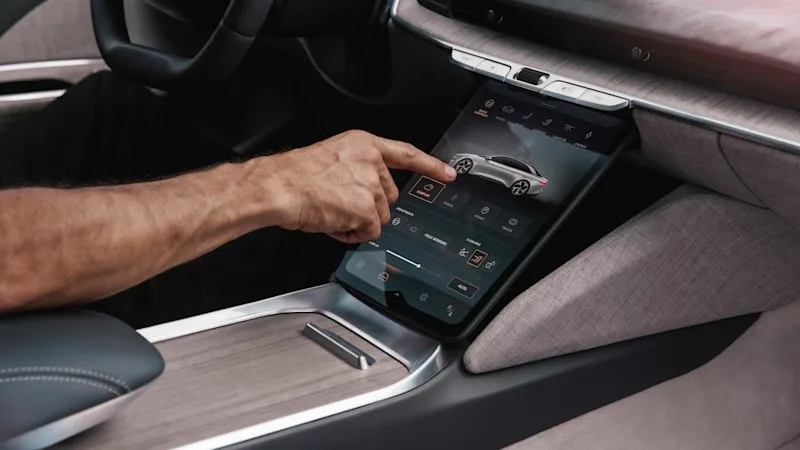
Not long ago most things in a car could be done while keeping your eyes on the road. But over the past decade, car manufacturers have been systematically replacing physical buttons, dials and tactile switches with glass touchscreens and touch controls. Now, just like our new microwave, cars screens demand our attention and active cognitive effort. For example, Tesla – and many other car manufacturers – locate demister functions on a central touchscreen.
On smartphones and tablets, touchscreens are brilliant.
5News aggregated this summary from the outlet’s public feed. The full article, with all the context, is on www.watoday.com.au — the content belongs to WAtoday.