Is Hastie a hero for tackling Hanson? It’s complicated
Anyone who has spent time on social media has seen the cycle. First, transgression: a particular social boundary is seen to have been breached. Second, demonising: the individual accused of the transgression is turned into a villain. Third, the backlash, as those who object to this particular social boundary being policed push back hard. Finally, on the principle of “my enemy’s enemy is my friend”, the original villain becomes a hero of sorts, at least to one side of politics.
This cycle did not originate with the internet. As satirical character Philomena Cunk put it , you might call Jesus “the first celebrity victim of cancel culture”. But social media sped up the cycle and made it ubiquitous. When we talk about the tendency of social media to “reward outrage”, as independent senator David Pocock did last week, this is often what is meant. Social media has made extremely simple stories – in which each issue can be split into good and evil – a far more powerful part of our culture.
Last week, we received two demonstrations of such cycles and their simplifications (not all of it online).
One came after allegations emerged involving drug use, years ago, by the Victorian leader of One Nation, Warren Pickering . This was the transgression. Pickering was on his way to becoming a villain. Then a press conference was called. It was dramatic, full of stories obviously chosen for their emotive force, with arguments carefully sculpted. And it was fascinating, too, because it was another sign – along with the party’s recent hiring of a former Scott Morrison adviser – that One Nation is in a period of transformation. It is getting serious.
So Pickering was made into a sympathetic character. To whom was he now a hero? As Chip Le Grand argued in this masthead, One Nation’s base, who will see Pickering as a victim of both media smears and a woman (his ex). But perhaps others will admire him, too. Pickering’s story about turning his life around was both moving and convincing. For some, this presentation may have been more appealing still given the original stories ran in The Australian , a publication hated by the left and known for its bullying tendencies.
But while Pickering was declared the “winner” of this clash, this is not really a simple story. The reporting raised legitimate questions about hypocrisy, given One Nation’s usual tough line on drugs. (Pickering denied some of the accusations.) And Pickering, of course, is a leader of a far-right party that deploys racism, scapegoating migrants for many of the problems in society. As an individual, Pickering may be sympathetic. But how far should this affect our impression of him as a politician wanting to influence the nation?
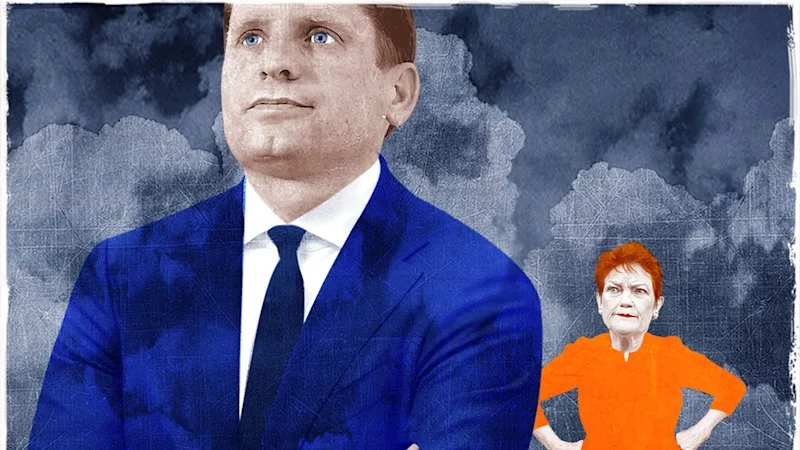
The other example came in Andrew Hastie’s decision to attack Pauline Hanson over her party’s cartoon suggesting he was a “traitor”. Hastie, having waited several weeks before responding, declared he was “calling time on cowards who have never served a day in the Australian Defence Force … they’ve picked a fight with the wrong veteran”.
Hastie is in the right here. He was entitled to defend himself.
5News aggregated this summary from the outlet’s public feed. The full article, with all the context, is on www.watoday.com.au — the content belongs to WAtoday.