The worst part of ageing? No one knows what I’m talking about any more
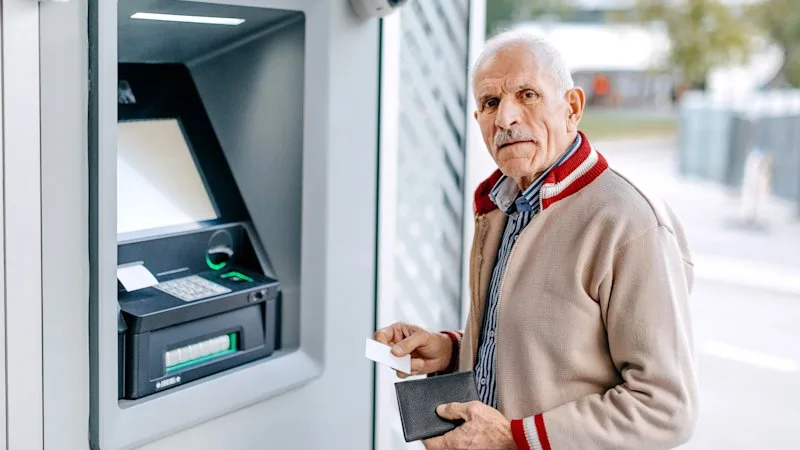
If you are older than 25, you have a problem: your customary expressions no longer make any sense. They refer to events, artefacts or people that have long faded from memory. This leaves you vulnerable to damaging criticism.
There you are, for example, in the posh restaurant and you open the menu to discover that the steak costs $47.90. For those of my generation, it’s pretty much mandated by law that you must look up from the menu and, in a jovial tone, say: “Looks like I’ll have to consult my bank manager.”
The others at the table are meant to chortle along, and then say: “Oh my god, yes, I better check with my own bank manager.”
Instead of participating in this comforting ritual, everyone – at least everyone under 60 – now looks confused. “Bank manager? Who’s that? What’s that? Do you have someone in the bank who you can actually call?”
What was meant as a sunny aside now has you condemned as the sort of plutocrat who has a hotline to the head of Macquarie Bank. “Hello Shemara, I don’t mean to disturb your evening, but do you think my account could stand a $47 steak?”
You try and stare down the criticism. “No, no,” you stammer to the baffled crew. “I don’t actually have a bank manager. In fact, I rang Westpac the other day, was on hold for ages, then a computer voice told me it was impossible to help me, and could I kindly put my request into ‘the app’ – but then the app didn’t work. And when it finally did work, it said I couldn’t remember my password, but I remembered it just fine. And then I was locked out of my banking, which left me crying for a while, and I now face the possibility of a fine because I can’t pay my council rates which, by the way, are outrageous.”
The younger diners nod. They smile sympathetically. Then one of them – usually it’s your son or daughter – says: “So why did you mention this bank manager if you don’t actually have one?”
From then, it’s a full-on history lesson. “Banks,” you say, “used to have branches. They were in every suburb and every town. Each of the big four banks would have a branch office in the street in which you did your shopping.” You say all this in a soft, dreamy voice, the sort of voice you might use if discussing the golden age of Rome, the achievements of the Renaissance, or the first iteration of Donkey Kong .
“There were tellers,” you tell them, “five, maybe six of them, human beings every single one, standing behind a counter, ready to help you with your banking. Sometimes they’d chat with you about your day. Then, in an office to the right or sometimes the left, there was the bank manager, and you’d go and see him if you wanted a home loan, or you were overdrawn on your account, or just wanted some business advice.”
Then the young people ask: “So Dad, have you actually met a bank manager?” They, too, use a soft, dreamy voice, as if speaking of something slightly beyond their belief system, such as a leprechaun, or a Bigfoot, or the Loch Ness Monster.
At this point, you are forced to confess. “Even by my time, the local bank manager was a figure of legend. But, you know what, I think my dad once met one.”
The young people sit back in their chairs. “Wow,” they say.
5News aggregated this summary from the outlet’s public feed. The full article, with all the context, is on www.brisbanetimes.com.au — the content belongs to Brisbane Times.