The world economy is becoming wary of America
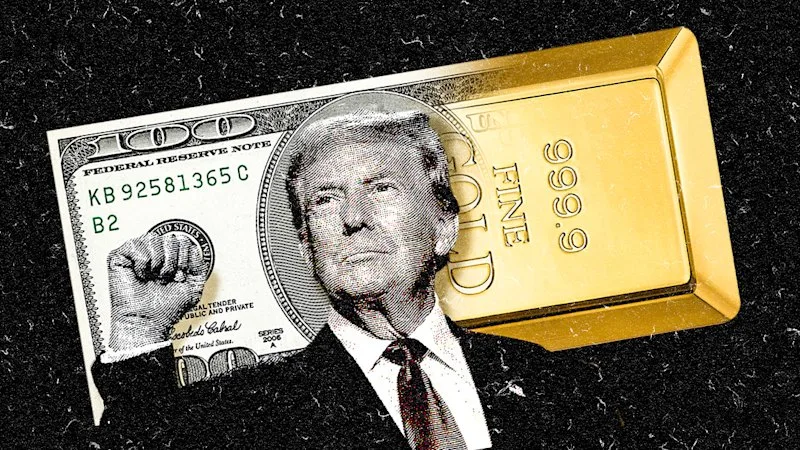
Global investors are balking at US bonds. Talk of the US dollar’s dwindling power is getting louder. Foreign governments are hauling their gold out of American vaults.
Almost two years into President Donald Trump’s second term, the world economy is increasingly looking for ways to distance itself from the United States. Concerns about a $US40 trillion ($56 trillion) debt burden , the excessive use of sanctions to solve foreign policy problems and Trump’s penchant for pushing the limits of the rule of law are raising questions about the appeal of the world’s largest economy as a haven for global investment.
Despite pledges by foreign companies and nations to invest in the United States — in many cases to curry favour with the White House — capital is starting to seek alternative destinations.
“Geopolitical factors and US weaponisation of the dollar through financial sanctions are causing central banks and other official investors to attempt to diversify away from dollar assets,” said Eswar Prasad, the former head of the International Monetary Fund’s China division.
The United States is not yet an investment pariah. Private investors are still pouring money into American financial markets and stocks, artificial intelligence infrastructure is booming and no rival currency is poised to topple the US dollar imminently.
In testimony before Congress last week , Treasury Secretary Scott Bessent said he remained confident in the credibility of the country’s financial system, arguing that bond auctions continue to operate successfully and that the dollar is still thriving as measured by its share of global transactions.
“The US is, in fact, the leader, and the leader does not fear competition,” Bessent said. “Competition makes us better.”
The most glaring example is the bond market. Yields have been soaring as investors, nervous about the mounting national debt demand a higher rate of return for buying Treasury bonds. Earlier this month, the yield on the 10-year Treasury topped 5 per cent , reaching its highest level since 2007.
The ominous bond threshold was crossed a week after the US Treasury Department purchased $US5.2 billion of its own debt maturing in the next 10 to 20 years, part of a plan to inject demand into the Treasury market to try to push prices higher and yields lower. Bessent said investors were failing to understand the underlying strength of the economy and dared them to bet against him.
“It’s my dream,” Bessent said at Southern Methodist University. “I have asymmetric information. I am the house now.”
The Federal Reserve’s decision last week to raise rates has somewhat calmed concerns about the central bank’s grip on elevated inflation, fears that injected jitters into bond markets.
Yet with the United States’ long-term fiscal situation looking shaky, some countries are starting to wonder if America is a wise investment. Norway’s sovereign wealth fund, the largest in the world, has said it plans to reduce its holdings of US Treasurys as it looks elsewhere for stronger returns.
Nearly 90 per cent of global foreign exchange transactions are in US dollars.
5News aggregated this summary from the outlet’s public feed. The full article, with all the context, is on www.theage.com.au — the content belongs to The Age - Home.