Why Alex infected himself with blood-sucking hookworms, and kept them
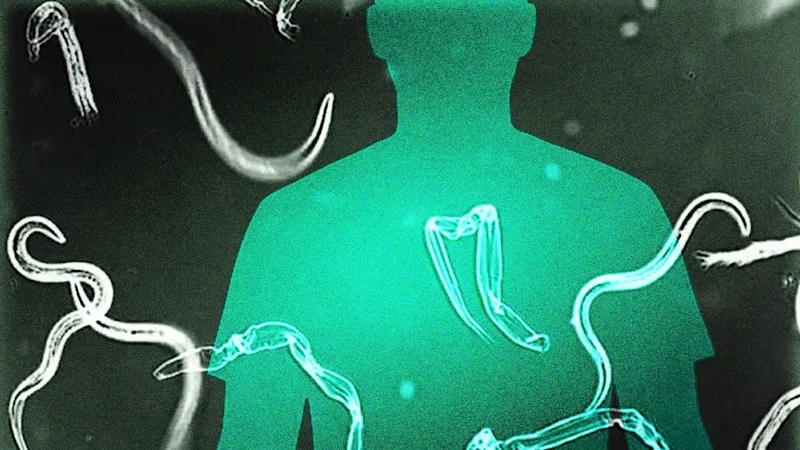
Seconds after the worms are applied to your forearm, they begin to burrow. The larvae deploy skin-dissolving enzymes and wriggle into the body to find a blood vessel. The feeling is not painful but can be intensely itchy. Once in the bloodstream, they are swept to your heart and pumped to the lungs, where they bust out of capillaries and crawl up your throat. Soon, you’ll swallow, shepherding the worms to the promised land: your guts. Here the worms affix to the walls of your intestines like leeches so they can drink your blood.
This is a highly sought-after experience. Scientists have long investigated how infection with parasites such as the human hookworm, Necator americanus , may soothe symptoms from a raft of conditions, including allergies, hay fever, asthma and multiple sclerosis. The approach, called helminth therapy, hinges on the anti-inflammatory effect of the worms, which secrete a cocktail of proteins that soothes the immune system to cloak the worm from attack.
“We are at a very exciting point scientifically,” says Dr Sheila Donnelly, a helminth (worm) researcher at the University of Galway with research links to the University of Technology Sydney.
“There is now a strong body of preclinical evidence that helminths produce molecules with powerful effects on inflammation and immune regulation.”
Despite anecdotal success stories and promising small experiments, much of the evidence from larger-scale studies into whether hookworms help with allergies, inflammatory bowel disease and insulin resistance is inconclusive or mixed.
But one thing remains consistent. At the end of these trials, researchers offer participants a deworming tablet. The vast majority refuse to take it. For some, it’s because they feel better physically and even mentally. Others, even if the worms didn’t alleviate their symptoms, find the worms inoffensive and see no harm in keeping them.
After a time, hookworm researcher and director of the Australian Institute of Tropical Health and Medicine Professor Alex Loukas said: “People think of the worms as part of their family.”
Some years ago, Loukas, who had spent years telling trial participants the worms were safe and well-tolerated by the body, decided to put his money where his mouth was.
“When I turned 50 I started to just get some general aches and pains in my knuckles, in my fingers – just general osteoarthritis, probably. And I thought, ‘oh, I wonder if the worms will help with that’.”
“I can’t rule out the power of placebo but, sure enough, that pain went away.”
In 1989, British epidemiologist Professor David Strachan observed children from larger families were less likely to develop hay fever. Kids with many siblings frequently infected each other with microbes, viruses and parasites, he proposed, possibly improving their immune systems and protecting against allergies. Children from big farming families, with greater exposure to animals and dirt, were six times less likely to have hay fever than city kids.
5News aggregated this summary from the outlet’s public feed. The full article, with all the context, is on www.watoday.com.au — the content belongs to WAtoday.