The Opportunity Party’s Treaty policy is closer to Labour than National. But is it a bottom line?

Opportunity Party leader Qiulae Wong.
During the current parliamentary term, the debate over te Tiriti o Waitangi ’s place in public life is arguably more polarised than at any time in the past 50 years.
But the parliamentary split on the issue could shift if the Opportunity Party becomes a player in forming the next government.
The most recent 1News Verian poll showed the party at 8%.
If that holds, it would easily make it into parliament with nine seats.
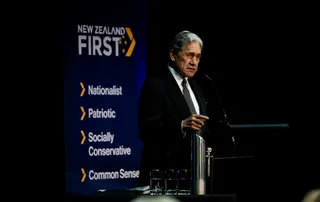
Right now, three parties have put the Treaty at the centre of their campaigns – but for quite different reasons.
Te Pāti Māori wants to restore and increase its influence.
ACT and NZ First want to keep diminishing it.
If the Opportunity Party makes it on current numbers, it could keep all three out of government by doing a deal with Labour and the Greens.
National and Labour, for the most part, seem keen to avoid overtly campaigning on the Treaty.
It’s not the main issue for their potential voters.
Treaty policy contributed to Labour’s loss in 2023, and has made managing coalition partners ACT and NZ First a constant problem for Prime Minister Christopher Luxon.
And while he recently said he’d rather not have “some yahoo or numpty from some other party” around the cabinet table, he’s also ruled out working with Opportunity .
Opportunity and the Treaty Opportunity calls itself a centrist party and says it could work with either Labour or National in government.
5News aggregated this summary from the outlet’s public feed. The full article, with all the context, is on theconversation.com — the content belongs to The Conversation Australia.