Off-guard and on point: Australia’s most unexpected portraits
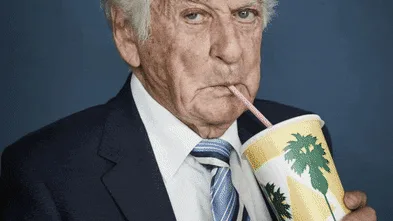
Prime Minister Bob Hawke was a man of lusty appetites. Philanderer, sports fanatic, champion beer-sculler, Cuban cigar lover. And, as Harold David’s surprising 2017 photo reveals, strawberry milkshake enthusiast.
David captured the larrikin elder statesman candidly sucking on a tall one during a magazine shoot for the launch of the interview book Wednesdays with Bob.
“We were in his house setting up, and he came in drinking that milkshake,” David recalls. “I’m like, ‘Wow, he’s going from chugging beer to drinking milkshakes. I love this.’ I said, ‘I know this isn’t for the magazine, but I need this portrait.’ [Bob] was game and got a real kick out of it. I love that glint in his eye.”
David’s unabashed image features in the National Portrait Gallery’s two decade survey of its annual Photographic Portrait Prize. The Hawke portrait is “quite a beloved work, and it won the people’s choice award [in 2018],” says curator Isobel Parker Philip. “It’s playful, mischievous, rewriting our expectations of what a portrait of a politician would look like.”
While the survey curators combed through every finalist over the course’s 19-year history, not all previous winners were included. “Winners have had their moment,” Philip says. The idea behind the exhibition is “to give a sense of the works that still feel urgent and show in microcosm the themes, or points of fascination, that have come up in past prizes”.
Unlike the Archibald Prize, whose subjects are public figures, the NPG’s “represents the range of Australian experience”, Philip says. “We have a lot of work that’s about community, family, regional life. A lot of work that’s about climate change, migration and displacement – things that showcase what people are thinking through.”
Where Magnum photographer Trent Parke humorously snaps his young son Jem at Christmas soaking under a shower, Allison Marion documents her son escaping the fires of hell. New Year’s Eve 2019 blurs portraiture with dramatic photojournalism. During the devastating summer fires of 2019-20 that swept across Victoria, residents on the Mallacoota coast were forced to flee by boat. Against a backdrop of smoky amber-red skies, Marion’s iconic image records her 11-year-old son Finn, masked and at the tiller, hightailing it with his family and dog.
“The prize has never just been about one type of portraiture photography,” Philip says. “All these artists are very attuned to the way that photography is not passive or objective. It has codes and conventions, and they often subvert and play with them, or amplify in different ways.”
Petrina Hicks, for example, employs the deadpan tropes of advertising and fashion imagery to create an uncanny and unsettling portrait of a teenage Rosemary . In other beguiling examples, the subject is barely visible. Shelley Xue’s portrait of her mother behind frosted glass symbolises the hidden facets of their relationship and the family secrets slowly being divulged late in life.
“[We] trust our audiences to read complex emotional states into these images, even if they don’t disclose the face of their subject,” Philip says.
5News aggregated this summary from the outlet’s public feed. The full article, with all the context, is on www.smh.com.au — the content belongs to Sydney Morning Herald - Culture.