Fed defies Trump, raises US interest rates for first time in three years
Washington: The US Federal Reserve has lifted interest rates for the first time in three years in a bid to rein in persistently high inflation fuelled by the ongoing war with Iran and its impact on the cost of energy.
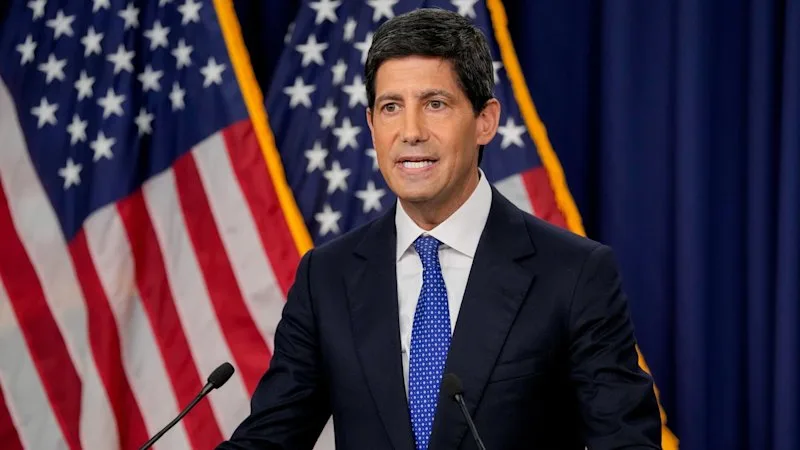
While widely expected, the move risks enraging President Donald Trump, who has furiously campaigned for the central bank to cut rates – piling pressure on his new handpicked Fed chairman, Kevin Warsh.
But the Fed’s governing committee voted unanimously on Wednesday (US time) to raise the target rate by 0.25 percentage points, to a band of 3.75 to 4 per cent. In a set of quarterly projections, the Fed also signalled that its rate-setting committee expects to hike rates a second time later this year to 4.1 per cent.
“The plain fact is that inflation is too high and has been for too long,” Warsh said at a news conference. “This [American] summer’s inflation readings do not tell me that underlying trends have meaningfully improved.”
The call to raise rates was the first unanimous, 12-0 decision by the Fed’s board of governors since May 2025. Warsh described it as a sober and responsible decision, and would not countenance future rate hikes, despite reporters pointing out that increases were rarely one-off.
“I’m not going to prejudge any future decisions we make,” he said. Nor would he comment on any discussions with Trump.
Economists widely tipped a rate rise after last week’s official data showed US inflation stuck at 3.4 per cent – above the Fed’s target of 2 per cent, driven largely by increasing energy costs.
The consumer price index ticked up 0.4 per cent in August in seasonally adjusted terms, with petrol up 3.9 per cent. After falling back to nearly pre-war levels, the price of Brent crude – the international oil benchmark - is back above $US100 a barrel.
That was compounded by new attacks by Iran-backed militants in Yemen and Iraq, targeting oil supplies that avoid the Strait of Hormuz by using the Bab al-Mandab Strait between Yemen and the African coast.
Saudi Arabia closed the East-West Pipeline across the Arabian Peninsula last week following drone attacks. Bloomberg reported the kingdom was aiming to restore about half the pipeline’s capacity within days.
Warsh indicated deteriorating geopolitical circumstances in the seven weeks since the Fed’s last meeting were a factor in its decision to lift rates.
“There’s no hiding from hotspots around the world,” he said. “Our judgment about what is the most likely or least likely in the geopolitical situation has changed.”
Trump did not immediately react to the decision. But he has consistently called for the Fed to cut rates, and led a vicious campaign against former chairman Jerome Powell for his failure to do so.
Two weeks ago, he posted online: “The Fed Board, with its great new leader, must get smart - BE PATRIOTS for a change. High interest rates put the U.S.A. at a very unfair disadvantage, and I won’t allow that to happen!”
5News aggregated this summary from the outlet’s public feed. The full article, with all the context, is on www.theage.com.au — the content belongs to The Age - Home.