Happy hormones and childhood memories: Why Chizuru turned to forest bathing in Lane Cove
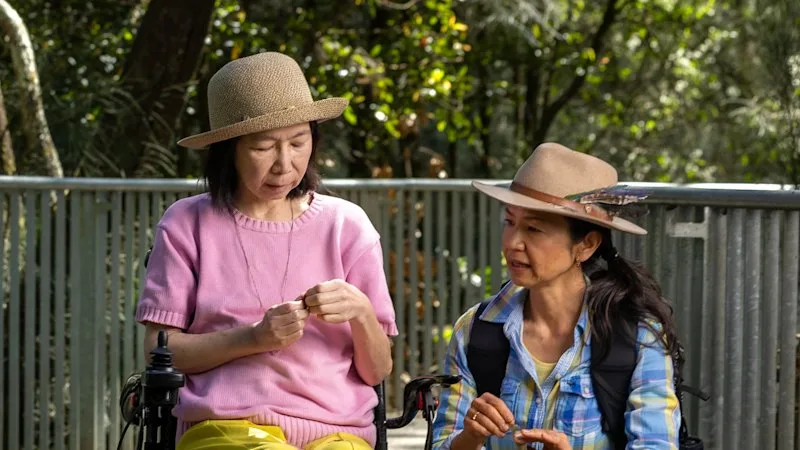
Dressed for spring in yellow and pink, Chizuru Sammut stopped to listen to the birds in Sydney’s Lane Cove National Park on Sunday morning.
She paused to smell some crushed myrtle leaves, which research shows boost immunity and reduce stress. “Nature is amazing,” Sammut, 59, said.
It was her dying wish to experience forest bathing, shinrin-yoku , a Japanese practice she remembered from her childhood in Japan before moving to Australia.
Now in a wheelchair, Sammut was diagnosed with bowel cancer four years ago. Before she got ill, she said she had enjoyed her garden in Carlingford and walks in the Blue Mountains with her husband Steve, and adult children, Alicia and Marcus.
She is one of 92 people in the past 10 months who have participated in aged care operator HammondCare’s Dreams program. Like the Make-A-Wish program but for older people, it has helped hundreds since it started 15 years ago.
Sammut, who is receiving palliative care from HammondCare at home, is the first to ask for forest bathing .
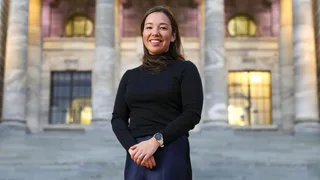
Her guide, Mayu Kataoka, a Japanese-Australian accredited forest therapy guide living in Sydney, says a slow mindful walk to smell, hear, feel and experience the bush can reduce discomfort and stress for people at the end of their lives.
With Sammut and her family, Kataoka stopped in front of a tree that dwarfed those below to discuss the power of the underground mycelium network that connects the bush.
Sometimes, Kataoka can hear a popping noise from deep inside the tree. “It is the sound of the universe, a massive life force. When we contact trees, our bodies start producing happy hormones. Trees are our lifeguards,” she said.
There is evidence forest bathing – including tree hugging – does produce benefits. Kataoka said: “No hippy stuff.”
Research shows that phytoncides, an organic compound found in plants such as lemon myrtle and at increased levels in the Australian eucalypts, boost the white blood cells that fight disease.
Kataoka said shinrin-yoku demonstrates that people are not separate from the natural world, but part of it. This knowledge can help people put aside concerns about the cycle of life.
“The beginning becomes the end, and the end becomes the beginning,” she said.
The co-ordinator of the Dreams program, Antoine Casgrain, a pyschologist, said many people wanted to marry before they die, including a mother of eight who fulfilled her dream.
5News aggregated this summary from the outlet’s public feed. The full article, with all the context, is on www.watoday.com.au — the content belongs to WAtoday.