Fur was abused when she was young. This simple decision changed everything
It’s increasingly common for adult children of celebrities to change their names after their parents’ divorces and subsequent family estrangement.
Suri, the 20-year-old daughter of Katie Holmes and Tom Cruise, changed her surname from Cruise to Noelle, her mother’s middle name. And last week, fresh off her 18th birthday, Brad Pitt and Angelina Jolie ’s daughter Vivienne Jolie-Pitt published a legal notice in the Los Angeles Daily Journal stating her intention to change her surname to Jolie.
She will be the fourth of the couple’s six children to drop their father’s surname: Zahara, 21, Maddox, 25, and Shiloh, 20, have all legally changed their surname to Jolie, citing personal reasons.
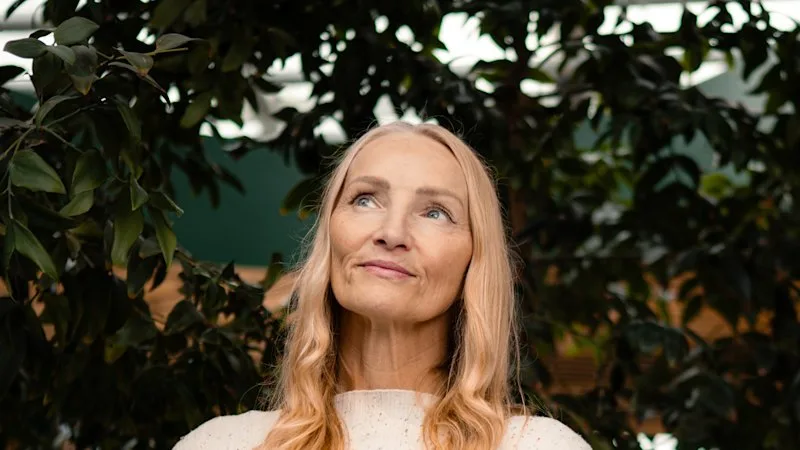
For Melbourne keynote speaker and speaking coach Fur Wale, formerly Jennifer Ann Wale, changing her name was also deeply personal.
“As a teenager, I experienced abuse from a family friend. After losing my parents, I later found myself in another abusive relationship. As I began to heal from those experiences, I went through a profound process of discovering who I was beyond what had happened to me,” Wale says.
“And somewhere along that journey, I realised my birth name no longer felt like it represented the woman I had become, or the woman I was choosing to be.”
“My mother chose my first name, so it has been a big part of my story and my history,” Wale says.
“But for me, changing my name was an act of self-definition. I had spent so much of my life having experiences define parts of me that I hadn’t chosen, [and] when I finally made the decision, I felt an incredible sense of certainty and peace.
“There was no drama around it. It simply felt right, and the emotional significance of actually seeing my new name become official was empowering.”
The name Fur is, in part, a homage to her original given name, Jennifer. “Instead of Fer, I made it Fur. It was unique,” she says. “For me, Fur represents authenticity, freedom and self-definition. It feels like me.”
Dr Michelle Peterie from the Sydney Centre for Healthy Societies at the University of Sydney, says that, for better or worse, names are central to our social identities.
“Many people feel connected to their name and appreciate the sense of identity and belonging it provides,” she says.
“When someone strongly dislikes or feels misrepresented by their name, however, it can be a source of deep distress. Because we use our names in almost every social interaction, this distress can be difficult to escape.”
“Shedding the name that doesn’t ‘fit’ and choosing one that does can feel cathartic and empowering. It can also meaningfully shape how the person is seen and perceived by those around them,” Peterie says.
5News aggregated this summary from the outlet’s public feed. The full article, with all the context, is on www.smh.com.au — the content belongs to Sydney Morning Herald - Home.