Rising tax burden or rosy prospects? Australia faces a test of its economic model
Australia faces rising national debt and a heavier tax burden for younger generations unless its productivity crisis is fixed, according to Treasury’s long-term outlook, which forecasts significant economic disruption as deaths start to outpace births.
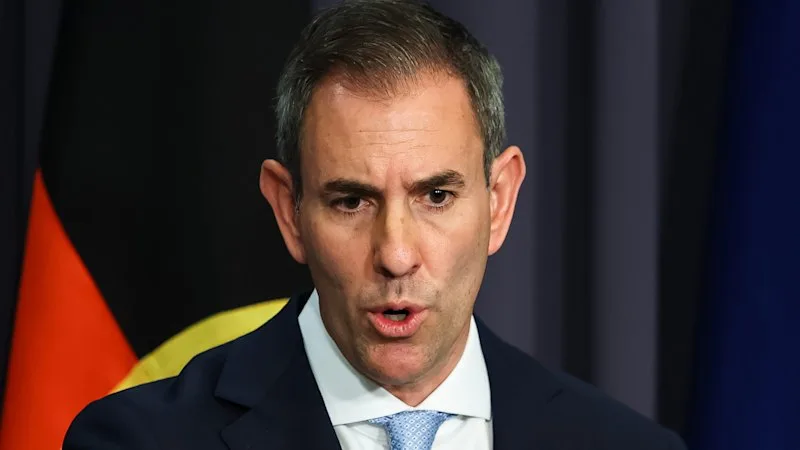
Treasurer Jim Chalmers defended his economic management in the face of criticism from Labor figures, justifying rosy forecasts on productivity in this term’s Intergenerational Report , released on Monday, and acknowledging “the budget will be strained” by decades of deficits.
The report, which maps economic and social changes likely to emerge over four decades, predicts that population growth will rely more heavily on migration as fertility rates drop in line with those of many developed economies. Labor tightened the migration program last week but did not alter its forecasts for 225,000 net migration next year.
The report claims Australia is relatively well-placed to face 21st-century global turmoil because the renewables rollout will make power cheaper, Australia is an attractive base for the AI data centre boom, and demographic problems are not as stark as those experienced elsewhere.
“Accelerating change is putting more pressure on people. It’s eroding trust in the institutions of our democracy,” Chalmers said.
“It’s exacerbating the strain felt by younger generations in particular. The division in politics now is not between those who accept this and those who don’t, but between those who prey on it and pick at it and politicise it and catastrophise it – and those who seek to alleviate it.”
The population aged 85 and over is projected to treble to 1.9 million by 2066, putting additional pressure on the budget. By the 2060s, deaths are expected to exceed births in Australia, as they already do in Japan and Germany. Australia’s population growth is expected to slow from a nearly world-leading 1.5 per cent to about 0.9 per cent, much of which will continue to come from migration.
Core to the political debate over Chalmers’ announcement are the government’s assumptions on productivity growth, which represents the economy’s efficiency and underpins government predictions of rises in wages and living standards.
Economists have contested the government’s assumption of 1.2 per cent yearly productivity growth as overly optimistic because the rate has been 0.8 per cent over the past 20 years and just 0.3 per cent over the past decade.
Under the 1.2 per cent scenario, gross debt as a share of GDP is projected to decline from 33 per cent of the economy in 2025-26 to a low of 22 per cent in the mid-2050s. But using the lower assumption of 0.8 per cent, debt would balloon to 55 per cent and annual deficits would reach a large 4 per cent of GDP.
At a household level, the lower assumption would mean the average Australian’s income in 2066 would be 13 per cent smaller, at $136,000 instead of $157,000.
5News aggregated this summary from the outlet’s public feed. The full article, with all the context, is on www.brisbanetimes.com.au — the content belongs to Brisbane Times.