Nepal disaster reveals danger lurking beneath thawing ice
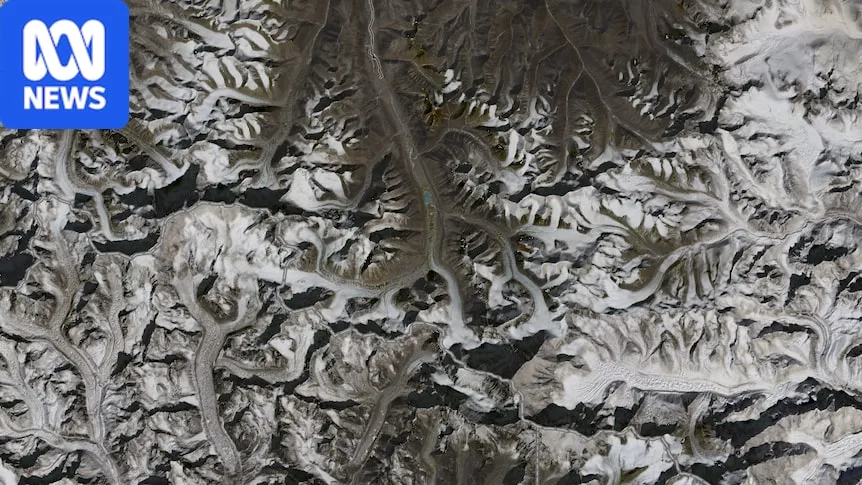
The mud tsunami in Nepal has brought the risk from the warming climate to mountain communities into sharp focus.
Thousands of people are still missing, and the death toll is rising. Dozens of bridges have been washed away and vast sections of road obliterated, making rescue operations through the rugged Himalayan terrain even more difficult.
Beyond melting ice and glacial lakes at risk of overflowing, the very ground people have built their lives on is shifting. Scientists have warned for years that a warming climate is destabilising the Himalayas, and there are far-reaching consequences for infrastructure and those who live there. Could some of these places become too dangerous for people to live in?
It's a question causing Professor Umesh Haritashya, a glacier expert from the University of Dayton, to pause.
"It's hard to tell people to move," says Haritashya, who is part of an international investigation to help understand the unfolding disaster.
"We know where the slope instability is, we know where the glacial lakes are, we know the area is warming faster. We need to figure it out to communicate properly to these communities so that they can understand the risk associated with it, and then they can figure it out."
The Himalayas' majestic snow-capped peaks and colourful villages draw millions of tourists to the region every year. But a warming climate is turning the very geography that draws them there into a growing threat.
There are more than 55,000 glaciers in the Himalayas, Karakoram, and Hindu Kush mountain ranges, containing more ice and snow than any region outside the polar regions. It's why the region is often called the "third pole".
The area is warming faster than the global average, causing the glaciers to retreat. Not only does it increase the risk of a glacial collapse, but the melting ice also turns into large glacial lakes, held back by loose sediment and rock.
"I know as a scientist, we all want you to be cautious until our data says that's clear to attribute something to climate change," Haritashya said.
"But climate change is certainly playing a role in that area because we are seeing the frequency of these events occurring in these kinds of valleys."
Haritashya's research has logged more than 1,466 glacial lakes in the region, most of which have formed in response to the rising temperatures since the second half of the 20th century. Because their barriers are unstable, they can fail directly, but avalanches or rockfalls crashing into them are another major danger, generating a huge displacement wave that overtops the dam and triggers a glacial lake outburst flood (GLOF).
But another problem lies beneath the surface. Large areas of the Himalayas are permafrost. The ground is not just made of soil or rock; it's also moisture that remains frozen solid year-round, as long as temperatures remain low enough.
Ice acts a little like cement inside mountain slopes. As temperatures rise and that ice thaws, previously frozen rock, sediment and moraine material can become unstable, increasing the likelihood of landslides, debris flows and rock-ice avalanches.
5News aggregated this summary from the outlet’s public feed. The full article, with all the context, is on www.abc.net.au — the content belongs to ABC News Australia - Top Stories.