‘Cannot claim to be taking climate seriously’: Pressure on UK to extract last North Sea oil
Aberdeen: The British North Sea, once a hub for oil and gas drilling, has faced a quarter-century of declining production, depriving communities along a foggy stretch of Scottish coastline of their economic core.
Now applications for two new offshore drilling projects – a lifeline for the region – could be decided by the government in the coming days. Andy Burnham, Britain’s prime minister, faces a choice with complex economic and political ramifications, no matter what he does.
He could approve the projects, known as Rosebank and Jackdaw, and face a potential revolt from powerful clean energy constituencies that strongly oppose more drilling.
Or Burnham could stop new fossil fuel development in the North Sea and risk sealing the economic fate of the nation’s energy heartland.
“It’s a tricky decision for the prime minister,” said Paul de Leeuw, director of the Energy Transition program at Robert Gordon University in Aberdeen, Scotland.
The drilling plans have been delayed by policy shifts through successive governments, as well as lawsuits. Burnham has signalled that he may support one or both of the projects. The war in Iran has made imported energy more expensive, giving supporters a potent argument for increasing domestic production.
Then there’s the Trump factor. President Donald Trump, who mocks climate change and is pushing his fossil fuel agenda on Europe, has pressured Burnham to open the North Sea. The decision by Burnham, who took office in July, could set the tone of his relationship with Trump.
Taylor Rogers, a spokesperson for Trump, said in a statement that new drilling would allow Britain to “restore its energy security and increase global supplies”.
And yet, experts say, any new drilling can only buy time for Britain’s North Sea region. About 93 per cent of the basin’s oil and gas has already been extracted, and no amount of political momentum can change its physical limits.
Last month, British oil giant BP, which has been operating in the North Sea for six decades, announced it would put its business there up for sale.
In Aberdeen, the epicentre of Britain’s drilling industry, the future of the North Sea is a constant topic of conversation. Local leaders acknowledged that the city might never be the energy powerhouse it once was. But, they argued, the government also shouldn’t push it into an early grave.
“You’ve now got something called British Petroleum saying they can’t operate in Britain anymore because of British policy,” said Russell Borthwick, chief executive of the Aberdeen and Grampian Chamber of Commerce. “Talk about a message of deindustrialisation.”
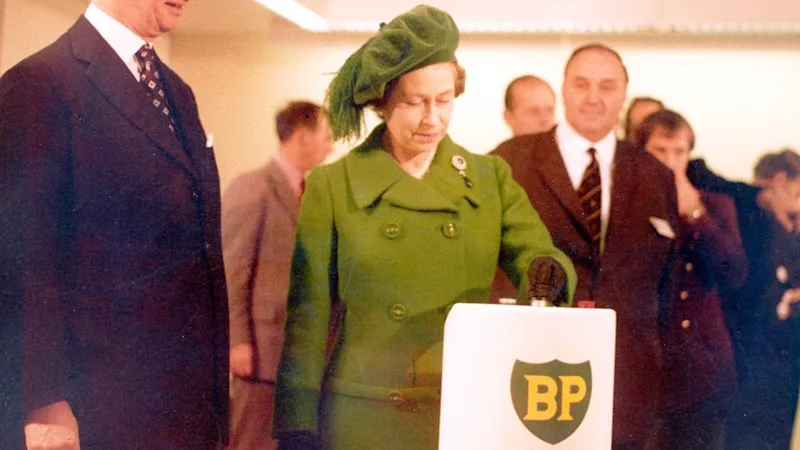
On a screen in front of him was a photo taken 51 years ago of Queen Elizabeth II inaugurating a BP oil field. In it, she is pressing a gold-plated button to start the flow of crude to a refinery in the town of Grangemouth in central Scotland.
Refining activities at Grangemouth stopped last year after years of financial losses.
5News aggregated this summary from the outlet’s public feed. The full article, with all the context, is on www.watoday.com.au — the content belongs to WAtoday.