Sean wanted to raise his son here. Then came the 'massive black box'
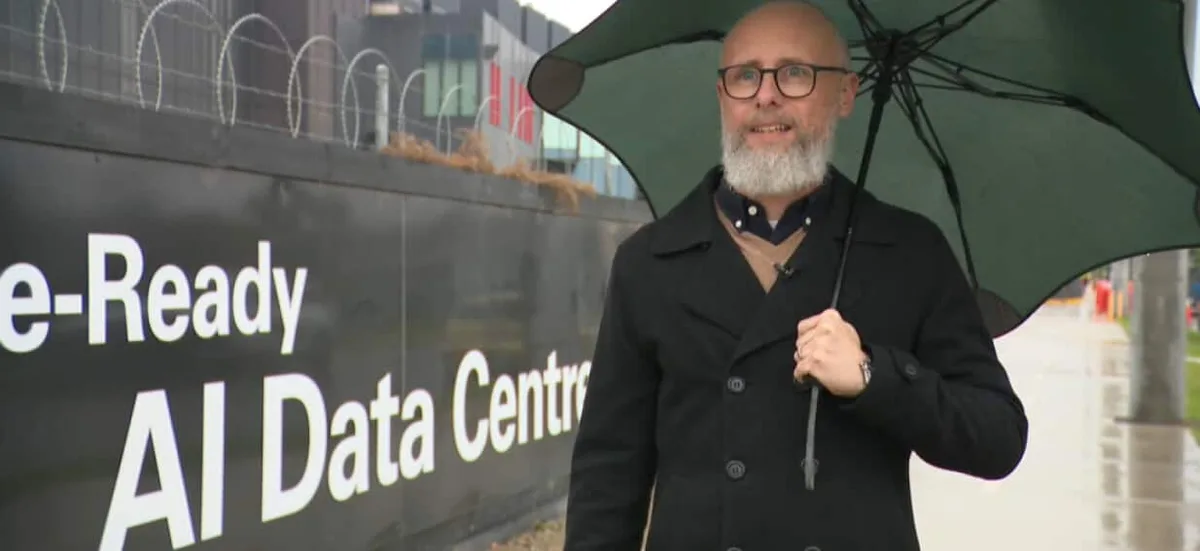
When Sean Brown moved to West Footscray two years ago, days after his son was born, he thought he'd found a good spot to raise a family — green space, a train station nearby, and a community with room to grow.
Instead, his home is now 300 metres from one of the largest data centres in the country.
"It's a massive black box in the middle of a residential area. There's this visual heaviness to it that you can't really escape," Brown tells SBS News.
NextDC's M3 facility in the Melbourne suburb brings a constant humming noise audible even 100m away, he says, while ongoing construction means near-constant light, noise and disruption.
Parking is scarce with facility workers competing for street spots, and Brown says whole streets have lost power for full days at a time during infrastructure works, with little warning and no compensation. He's also worried about health risks, and the future of his entire suburb.
Your trusted source for staying up-to-date with the world around you. Get free daily news updates and analysis, straight to your inbox.
Branded by its chief executive, Craig Scroggie, as "Australia's largest hyperscale AI factory", the M3 site is set to double in size by 2027 — covering 10 hectares in size, and drawing 225MW of power, 24 hours a day.
A separate facility, the Perri Melbourne Data Centre (PMDC), has been approved and planned just a few blocks over.
There are currently 162 operational data centres across Australia, with a further 90 proposed, according to the Climate Council — and it's unclear whether planned rules to data centres in residential areas will apply to any of them.
Prime Minister Anthony Albanese will use a speech to the Business Council of Australia's annual dinner on Tuesday night to announce new national rules that would block future data centres from being built near homes, schools, or prime agricultural land.
Developers will also be required to add more renewable energy to the grid than their data centres consume, minimise water use, and ensure new sites are appropriate for their size — avoiding land that could otherwise be used for housing.
"Australia is in a strong position to attract investment in data centres, but maintaining social licence will be essential," Albanese will say.
"That means ensuring energy bills do not rise, water security is maintained and locations are appropriate."
Asked about communities already living with data centres, Albanese did not directly answer when pressed on ABC Perth on Tuesday, instead pointing to the same social licence framework.
5News aggregated this summary from the outlet’s public feed. The full article, with all the context, is on www.sbs.com.au — the content belongs to SBS News - Latest.