Australia wants a seat at the UN's most powerful table. What power would it yield?
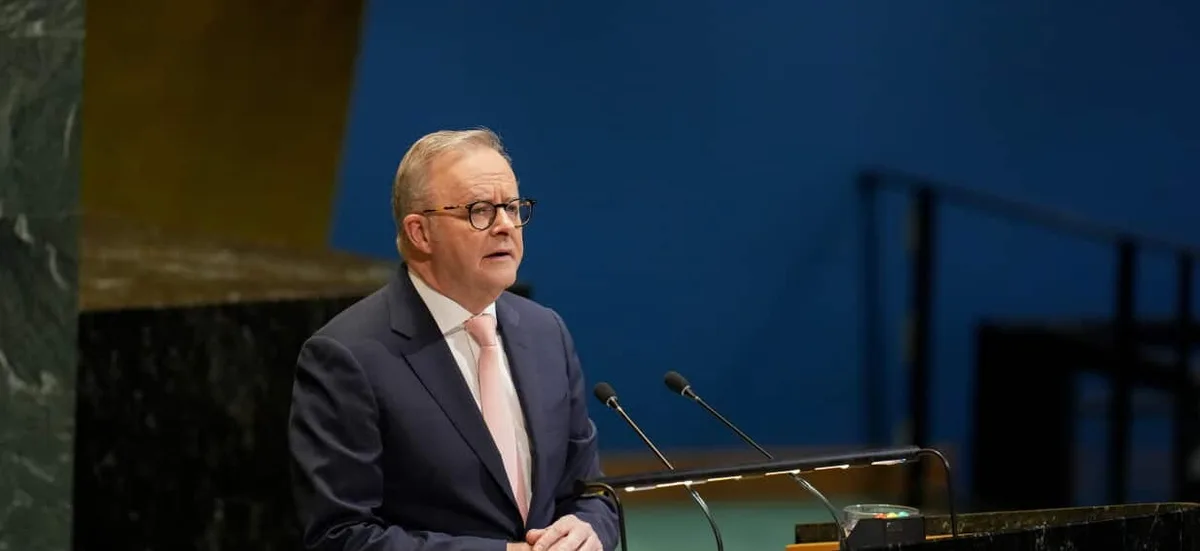
Prime Minister Anthony Albanese is heading to New York with a diplomatic pitch that has been more than a decade in the making: Putting Australia back on the United Nations Security Council.
Australia is campaigning for a non-permanent seat on the council for 2029-30, which would mark its first stint on the powerful UN body since 2014.
The government says a seat would give Australia a stronger voice on decisions affecting the country and the region.
Australia's campaign is expected to focus on issues including artificial intelligence, cyber threats and online safety, as well as climate action, international law and support for Pacific nations.
But what exactly does the UN Security Council do, and what would Australia gain by being on it?
Your trusted source for staying up-to-date with the world around you. Get free daily news updates and analysis, straight to your inbox.
The Security Council is one of the six main bodies of the United Nations and has primary responsibility for maintaining international peace and security.
Five of them — China, France, Russia, the United Kingdom and the United States — are permanent members, while another 10 countries are elected by the UN General Assembly to serve two-year terms.
Unlike most other UN bodies, the Security Council can make decisions that member states are obligated to implement.
It can impose sanctions, establish peacekeeping operations and, in some circumstances, authorise the use of force. It can also investigate disputes, call for peaceful settlements and make recommendations aimed at maintaining or restoring international peace and security.
And there is an important catch — each of the five permanent members has veto power, meaning a negative vote from any one of them can block a substantive resolution even if it otherwise has enough support.
Australia would not gain that veto power if elected, as it belongs exclusively to the five permanent members of the Security Council.
Non-permanent members such as Australia have the same single vote on council decisions, but cannot unilaterally block a substantive resolution.
While a non-permanent seat does not come with a veto, it gives countries a direct role in decisions they would otherwise largely have to influence from outside the council.
5News aggregated this summary from the outlet’s public feed. The full article, with all the context, is on www.sbs.com.au — the content belongs to SBS News - Latest.