Australian scientists say they'll have a live Tasmanian tiger by 2036
Scientists hoping to catch a tiger by the gene trail are on the verge of creating a live thylacine before the 100th anniversary of the death of the last-known specimen famously filmed in a zoo.
Using advanced genetics, international scientists are working to bring the legendary marsupial back from extinction.
This week marked the 90th anniversary of the death of the last Tasmanian Tiger in Hobart on September 7, 1936.
The marsupial, an apex predator that once roamed the Australian mainland, was wiped out in its last stronghold by European hunters, habitat destruction and disease.
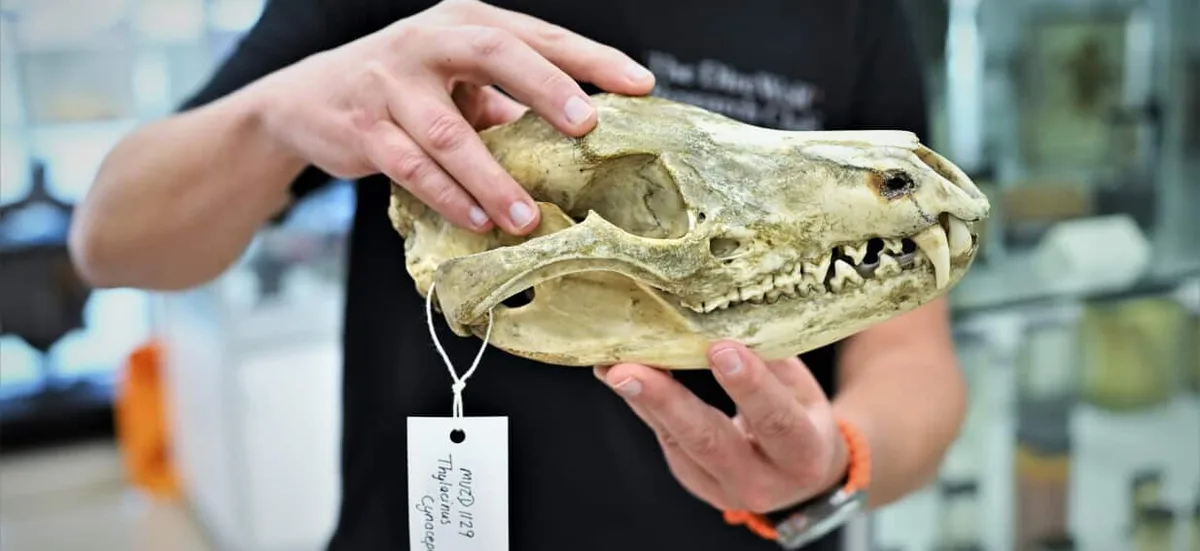
Drawing on thylacine remains in museums and universities, researchers have already pieced together a full genome in a step toward reviving the species.
Your trusted source for staying up-to-date with the world around you. Get free daily news updates and analysis, straight to your inbox.
Given the progress, lead geneticist for the project at Melbourne University, Professor Andrew Pask, is very hopeful a live thylacine can walk the Earth again in 2036.
Four years ago, he teamed with Colossal Biosciences in the US, and now a large team of scientists is focused on bringing the tiger back, with the technology well advanced and pushing boundaries.
Genetic engineering and editing were now possible at scale, and artificial intelligence helped further, Pask said — the first scientist to put a thylacine gene into a mouse and make it work.
When a full genome is sequenced, it's a matter of finding the closest living relative to the extinct species.
In the case of the thylacine, that's a tiny marsupial called the Fat-tailed Dunnart, which is about 99.8 per cent genetically identical to the tiger.
Gene-editing tools are then used to change every bit of code where the dunnart differs from the thylacine, with cloning employed using an egg from a donor dunnart.
"That's part of the technology we're working on at the moment; how we clone, how we take a cell and create a whole animal from it in marsupials," Pask said.
"You build up over time, get closer and closer to live DNA cells of the thylacine. We're in that process now of making all of those edits."
5News aggregated this summary from the outlet’s public feed. The full article, with all the context, is on www.sbs.com.au — the content belongs to SBS News - Latest.