Australia's runway warning: What 22 years of data reveal
Four close calls on Sydney Airport runways in as many weeks have put air traffic management in the spotlight.
It’s too early to determine the exact cause of each one. But four ground-safety occurrences at Australia’s busiest airport in a little over three weeks raise an obvious question: how common are occurrences like these, and are they becoming more frequent?
To examine the broader pattern, I analysed Australian Transport Safety Bureau data from 2003 to 2025 for Australian commercial air transport, focusing on runway incursions (the incorrect presence of an aircraft, vehicle or person in a protected runway area) and taxiing collisions or near collisions (an aircraft colliding or nearly colliding with another aircraft, person or object while taxiing).
The most recent incident occurred just after 8am last Tuesday, when two planes were given permission to use the same runway at the same time. Luckily, one plane stopped when its pilot saw the other plane.
Your trusted source for staying up-to-date with the world around you. Get free daily news updates and analysis, straight to your inbox.
A little over a week earlier, on August 9, there were two more incidents in less than three hours.
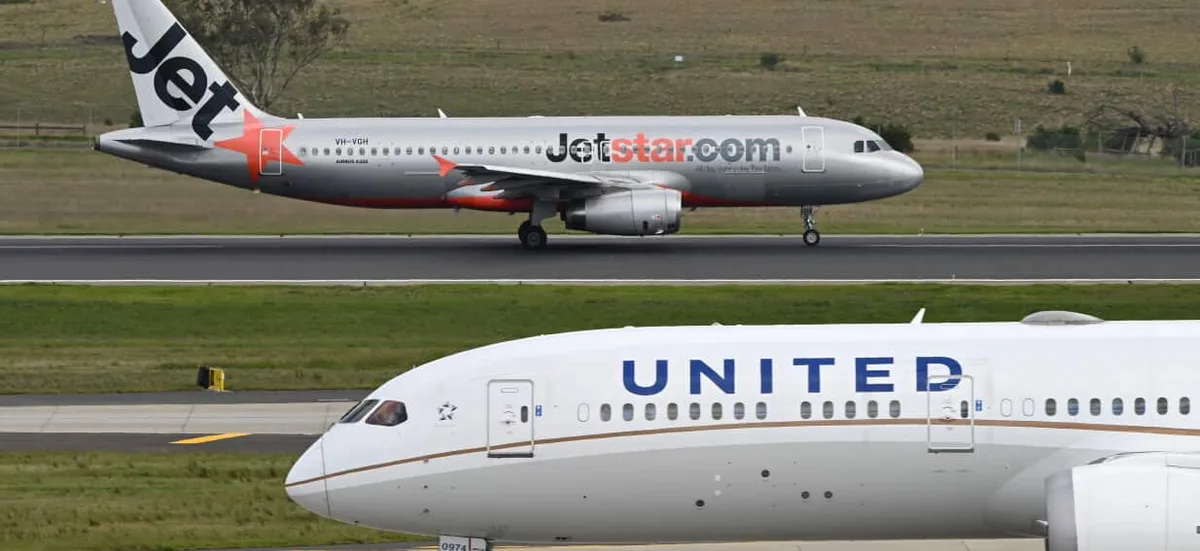
At 7.20am, a Jetstar Airbus A320 preparing to depart for the Gold Coast encountered an empty Qatar Airways Boeing 777 being towed across a taxiway. Both planes stopped abruptly. One Jetstar cabin crew member sustained a serious injury.
Then, at about 10am, a Virgin Australia Boeing 737 bound for Perth began its take-off sequence on a runway as a Qantas 737 crossed another runway ahead. Both crews reported having received the relevant clearance from air traffic control. The Virgin crew stopped as air traffic control cancelled its take-off clearance.
On July 27, air traffic control cleared a Qantas Boeing 737 to cross a runway while a smaller plane was still landing. Air traffic control detected the issue and alerted both crews, with the 737 stopping after passing the holding point.
The Australian Transport Safety Bureau investigates and reports on safety incidents involving planes, helicopters, trains and boats. These incidents include those that happen during taxiing, takeoff and landing.
Raw counts of reported occurrences can be misleading because aviation activity has varied substantially, particularly during the COVID pandemic. More flying creates more risk. So I also calculated occurrence rates per million flight hours, for both domestic aviation and all commercial air transport, which includes domestic aviation as well as other forms of aviation such as freight and charter.
For domestic aviation, analysis of the annual data from 2003 to 2025 shows a significant increasing underlying trend in both the number and rate of taxiing collisions or near-collisions. Across the period, the number increased on average by about one additional occurrence every three years. The significant increase in the rate indicates this trend cannot simply be explained by growth in aviation activity.
Across all commercial air transport, taxiing collisions or near-collisions have also increased significantly in number, but not in rate.
5News aggregated this summary from the outlet’s public feed. The full article, with all the context, is on www.sbs.com.au — the content belongs to SBS News - Latest.