This museum offers a ringside seat on the life of boxing’s greatest
Sport and alcohol are a potent mix – and both attract visitors to Louisville, Kentucky’s largest city. It’s home to the Kentucky Derby, the country’s longest-running sporting event. Also known as the “Most Exciting Two Minutes in Sport”, the race has run every year since 1875 – including during World War II and the COVID pandemic.
Louisville is also nicknamed Bourbon City as it pumps out a third of the US’s output (one downtown block is called Whiskey Row and distilleries host more bourbon tours than you can poke a swizzle stick at). The city’s souvenir badges say things like “Talk derby to me”, “Be the mint to my julep” and “Call me old-fashioned”.
A huge bronze-coloured cylinder incorporated into the Muhammad Ali Centre’s architecture might resemble a cocktail shaker but of course it is not (the city’s most famous son, born here in 1942 and buried here in 2016, converted to Islam and was a teetotaller). The structural element was inspired by Ali’s lighting of the torch at the 1996 Olympics in Atlanta.
From certain angles, you might also spy a winged roofline – an homage to Ali’s poetic taunt to opponents that he could “float like a butterfly, sting like a bee”. Artfully placed tiles on the facade depict Ali in various boxing stances.
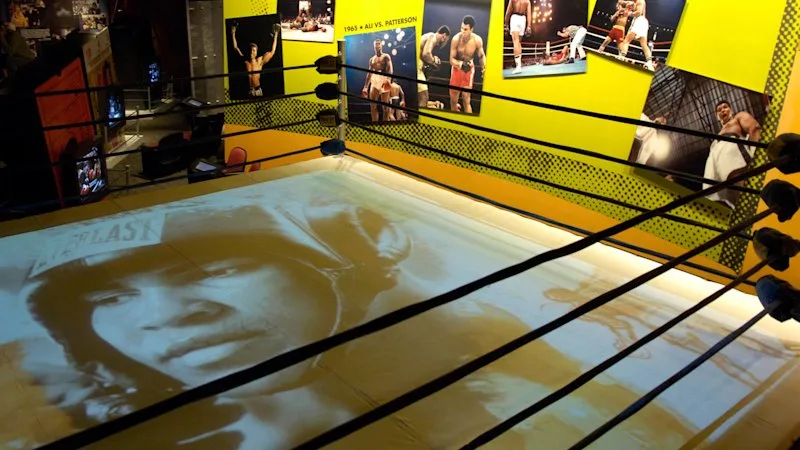
The centre, overlooking a stretch of the Ohio River separating Kentucky from Indiana, opened in 2005. Celebrating the outspoken boxer and activist, once called the “Louisville Lip”, before simply becoming “The Greatest”, it showcases not only Ali’s sporting achievements but his humanitarian ones. It also includes a prayer and reflection room – an acknowledgment of his faith.
Get exclusive travel deals delivered straight to your inbox. Sign up now.
This might sound serious, but there’s also lots of fun to be had. At a re-creation of Ali’s Deer Lake, Pennsylvania training camp, for example, you can shuck your shoes and step into a ring to take boxing lessons from one of Ali’s nine children.
From a TV screen, Laila (who followed in her father’s dancer-like footsteps and remained undefeated until her 2007 retirement) advises: “Check out his trademark shuffle he used to avoid and confuse opponents.” Then put her lessons into effect by “shadow-boxing” Ali himself.
Ali’s tumultuous, multifaceted life (which included 30 years of living with Parkinson’s disease) was so large that it’s an almost impossible task to cover it all. Of course, the centre spotlights his Louisville childhood, with a timeline revealing how 12-year-old Cassius Clay first became interested in boxing. When he reported the theft of his bicycle, he met a policeman who ran a boxing program. Cassius took to the sport right away. His journey from devout, churchgoing Christian to his embrace of Islam, leading to a name change at 22, is also explored in-depth.
Ali became a conscientious objector during the Vietnam War.
5News aggregated this summary from the outlet’s public feed. The full article, with all the context, is on www.watoday.com.au — the content belongs to WAtoday.