‘Oppressive’: Why this Liberal senator crossed the floor on expanding ASIO powers
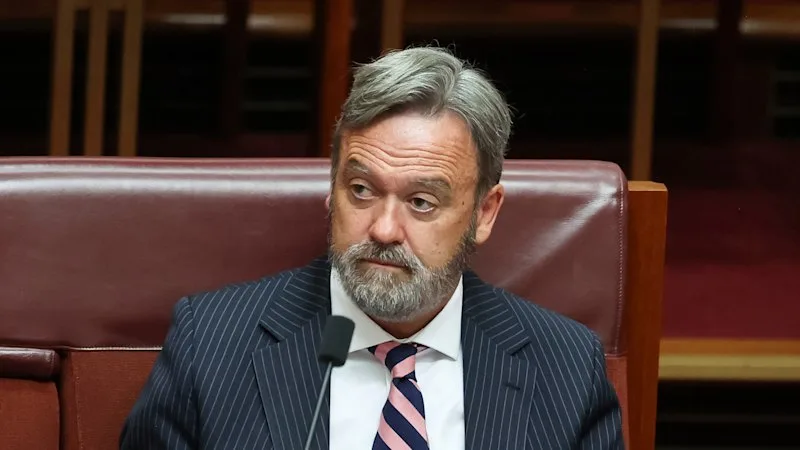
A Liberal senator who crossed the floor to vote against expanding ASIO’s compulsory questioning powers has vowed to use his position to challenge the longstanding bipartisan consensus on national security.
The laws, introduced after the September 11 attacks of 2001 in New York, allow the domestic spy agency to issue a questioning warrant requiring a person as young as 14 to give information or produce material that may assist in a serious investigation.
The government planned to make the laws permanent, but dropped that bid after an outcry and agreed to continue “sunset provisions”, which require a review every three years.
The bill, passed by parliament last week, expands the scope of adult questioning warrants to include sabotage; the promotion of communal violence; attacks on Australia’s defence system and serious threats to Australia’s territorial and border integrity.
The powers could previously only be used for investigations into espionage, politically motivated violence and acts of foreign interference.
Two Liberal senators, Andrew McLachlan and Alex Antic, crossed the floor to vote against the legislation, which was also opposed by One Nation, the Greens and independent senator David Pocock.
While ASIO insists the legislation is needed to respond to evolving security threats, McLachlan said he believed the balance had shifted too far away from individual liberties.
“I think these laws are particularly oppressive, and I’ve always been uncomfortable with their breadth,” McLachlan told this masthead.
“I’m not comfortable that both parties keep giving this power to the state. I think it’s time for a strategic review on whether the balance is right or wrong.”
National security legislation is often agreed upon in advance through the powerful Parliamentary Joint Committee on Intelligence and Security, which is only open to Labor and Coalition MPs.
While not necessarily opposed to bipartisanship, McLachlan said there was a need for more scrutiny and contestability when extraordinary powers are being given to national security agencies.
“Governments of any persuasion come up with a security law and oppositions are too scared to oppose,” he said.
“There needs to be a greater and wider debate on where civil liberties begin and end, and where the power of the state is necessary.”
McLachlan, one of the Liberal Party’s most moderate remaining MPs, previously crossed the floor to censure One Nation leader Pauline Hanson for claiming there are no “good” Muslims in Australia and opposed dumping the commitment to net zero carbon emissions.
5News aggregated this summary from the outlet’s public feed. The full article, with all the context, is on www.brisbanetimes.com.au — the content belongs to Brisbane Times.