Some free advice for pollies: Take a look into our real lives
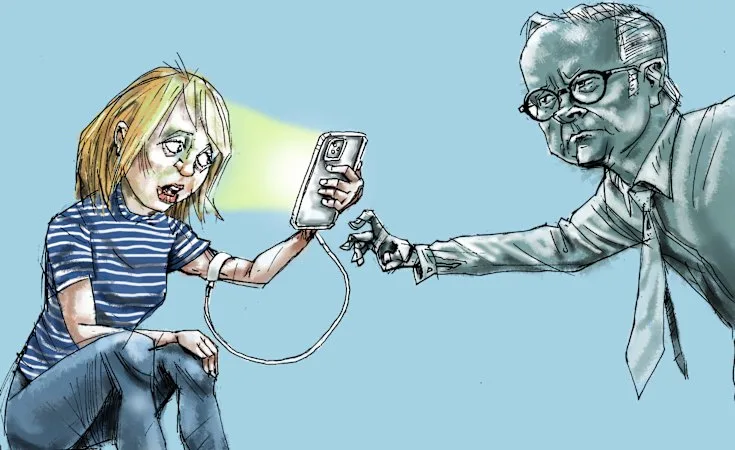
Last year, sitting in the audience at the Melbourne International Film Festival, I watched an audience member speak sharply to another who was looking at their phone, telling them to turn it off. I was surprised – but not unsympathetic to the frustrated buff’s sentiment. So I was relieved when, attending this year’s festival, I saw a notice flash up at the beginning of each film. If we looked at devices during the screening, we were warned, we may be asked to leave the cinema.
Some might find this heavy-handed. But to me, this is smart and sensible – saving the blushes of those who would otherwise be chastised by other filmgoers and saving everyone else the distracting glow of someone on their phone in a dark cinema.
And it reminded me, too, that politics often takes place in unexpected locations, practised by people who are not politicians. Because that note, while nominally about etiquette, has a serious – if unintentional – political dimension. I’ve noted before the advice of novelist Zadie Smith to young people . How, she asks, can we fight back against the billionaires who run our world? The idea she offers is simple: “All you guys would need to do is look away.” Put down your phones.
Perhaps naively, I suspect this might actually happen. Most of us feel poisoned by our phones. My hope, then, is that in coming years the culture shifts: that it becomes impolite to look at phones in company or to take them further than the entrance to our homes. This is part of what the Albanese government is encouraging with its social media ban for children under 16: not directly, but by setting a norm around behaviour.
Politics often works like this: as a collaboration between voters’ behaviours and politicians’ laws, each amplifying the other. We think politics is practised in Canberra, but in fact it exists in both these arenas – and in a third space somewhere between. (Commentator Tim Dunlop, who has written about where politics exists , describes politics and values as “existing in overlapping plots of the same garden”.)
This means that looking too closely at Canberra, too constantly, can mean you miss important things.
The rapidity of One Nation’s rise since the election reminds me of an observation made the day after Donald Trump’s first victory: it was not that the country had changed that day but, rather, that it had changed already and most of the political class had missed it.
So: are we now a different country than the one that voted just last year? Or had the country already changed by then but this was not reflected in the results? Or has it not changed at all, the current polls but a mirage?
Because polls, it must always be remembered, are very limited pieces of information . One political correspondent I know believes vox pops are often more useful. Speaking to a person gives you information that a number can’t: whether they are passionate or indifferent or genuinely angry.
Focus groups can provide some of this. Alex Fein from Redbridge polling has written of “fury ” coming through in focus groups for years now.
5News aggregated this summary from the outlet’s public feed. The full article, with all the context, is on www.brisbanetimes.com.au — the content belongs to Brisbane Times.