The Sydney private school boards that have the gender mix right – and all the ones that don’t
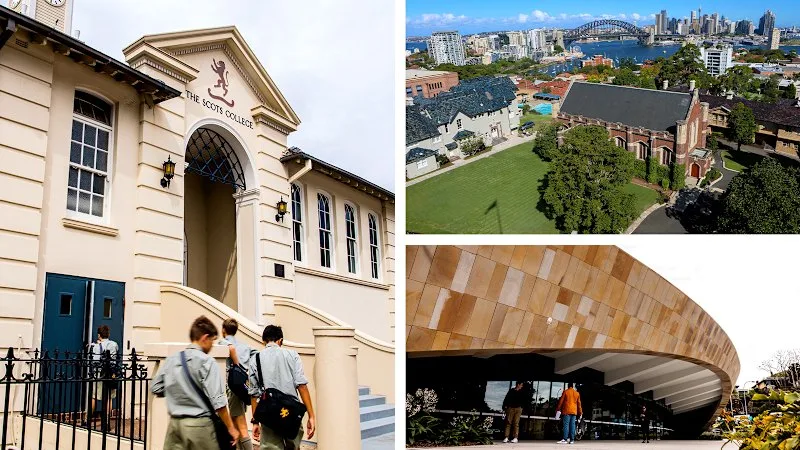
Only two of Sydney’s high-fee private boys’ schools have attained gender equity on their governing boards, prompting concerns that councils dominated by men are ill-equipped to grapple with issues of sexual consent, misogynistic social media content and preparing students for the modern workforce.
A Herald analysis of the leadership of 42 high-fee schools shows men outnumber women on the boards of most Sydney private boys’ schools, according to 2025 figures published by the government’s Workplace Gender Equality Agency.
The culture of private boys’ schools has been in the spotlight amid allegations that three students from Scots College allegedly raped a girl in a Bondi Junction alleyway last month.
In a separate incident, three teens – including two boys from St Gregory’s in Campbelltown – have also been accused of raping a teenage girl this month . The school is co-ed in primary and single-sex for high school.
At Scots College, 88 per cent of the board are men, according to the 2025 figures. Its website lists one woman on its board, but it has recently appointed a second woman not publicly listed.
The Gender Equality Agency data used in this analysis pertains to the 2024-25 financial year and is reported as percentages. It is the second year the data has been published.
When the Herald last reported on the issue of school boards five years ago, King’s had only one woman on its 18-member board. It now has 15 council members, three of whom are women.
Shore had four women five years ago on its 18-member board, and now it has three. Under the school’s governing act, its council must be half clergy and half laymen.
Kate Harper, an experienced consultant focusing on board search and leadership succession initiatives, said many independent schools required their council to often include representatives from relevant stakeholder groups such as alumni and parent associations, and religious bodies.
“As not-for-profit entities, independent schools can look to the Australian Institute of Company Directors principles for not-for-profit boards which recommend an appropriate mix of people with a diverse set of skills, experience, and backgrounds that align with the organisation’s purpose, vision and strategy,” she said.
“Many Sydney independent schools have seen their enrolments diversify substantially over recent decades, with some becoming co-educational schools, and more international families enrolling.
“Current Council composition may therefore no longer be sufficient and should evolve to reflect this diversity.”
Harper said gender diversity at the top filters down to the culture of the school and the student experience.
“It is hard to see how a council dominated by one gender can effectively guide the school’s executive on preparing their students to deal with the many challenges and risks associated with social media, sexual consent, as well as preparation to join an increasingly gender-equal workforce.”
5News aggregated this summary from the outlet’s public feed. The full article, with all the context, is on www.smh.com.au — the content belongs to Sydney Morning Herald - National.