‘No-brainer’: Sydney council targets smart glasses in city-first ban on AI tech
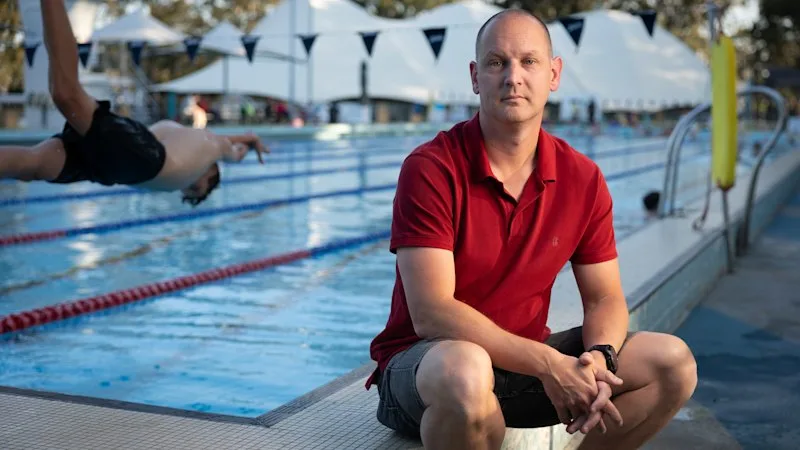
A Sydney council is set to consider giving lifeguards new powers to eject people wearing AI smart glasses from public swimming pools, as fears grow that the discreet cameras could be used to secretly record children and other swimmers.
Canterbury-Bankstown Council will vote this week on a proposal to ban the technology at its four public aquatic centres, making it the first council in Sydney to introduce a specific restriction if the measure passes.
Under the proposed rules, staff could order patrons to remove the smart eyewear, confiscate the devices or remove anyone who refused to comply.
Mayor Bilal El-Hayek said the proposal was driven by heightened community concern over the devices’ ability to conceal miniature cameras, microphones and AI capabilities inside glasses that resemble standard eyewear.
He said women and parents were particularly concerned that the technology could be used to covertly record people, including children, in swimming pools, change rooms and showers.
“You just need to look at the local chat groups and talk to people in our community to realise there are serious concerns around the unscrupulous use of the technology,” he said.
“Mums are telling me they want very clear guidelines to protect their children from preying predators. The biggest challenge for all of us is the advancements in AI technology are making it just that much harder to catch people doing the wrong thing in the act.”
The ban would cover Canterbury Leisure and Aquatic Centre, Birrong Leisure and Aquatic Centre, Max Parker Leisure Centre in Revesby and Roselands Aquatic Centre.
Revesby Workers Swim Club president Adam Rutter described the proposal as a “no-brainer” from a child-safety perspective.
“There’s a lot of anxiety around the devices because you don’t always know when the camera is filming, and that can make it very hard to detect when it’s being misused,” Rutter said.
“A lot of our members are women and children and their welfare needs to be at the centre of everything.”
The proposed ban follows similar moves by Brisbane City Council, which became the first Australian council to restrict the devices at its public pools, and Melbourne’s Yarra Council, which enacted bans across pools, gyms, playgrounds and childcare facilities this month.
Although wearable smart technology has existed for several years, privacy concerns have intensified as the devices have become cheaper and more widely available. Kmart recently sold out of its $89 Anko smart glasses following widespread interest.
Digital Rights Watch deputy chair Tom Sulston supported restrictions in swimming pools but warned enforcement could be difficult.
5News aggregated this summary from the outlet’s public feed. The full article, with all the context, is on www.watoday.com.au — the content belongs to WAtoday.