Questions were mounting at the border. Then they found a tunnel
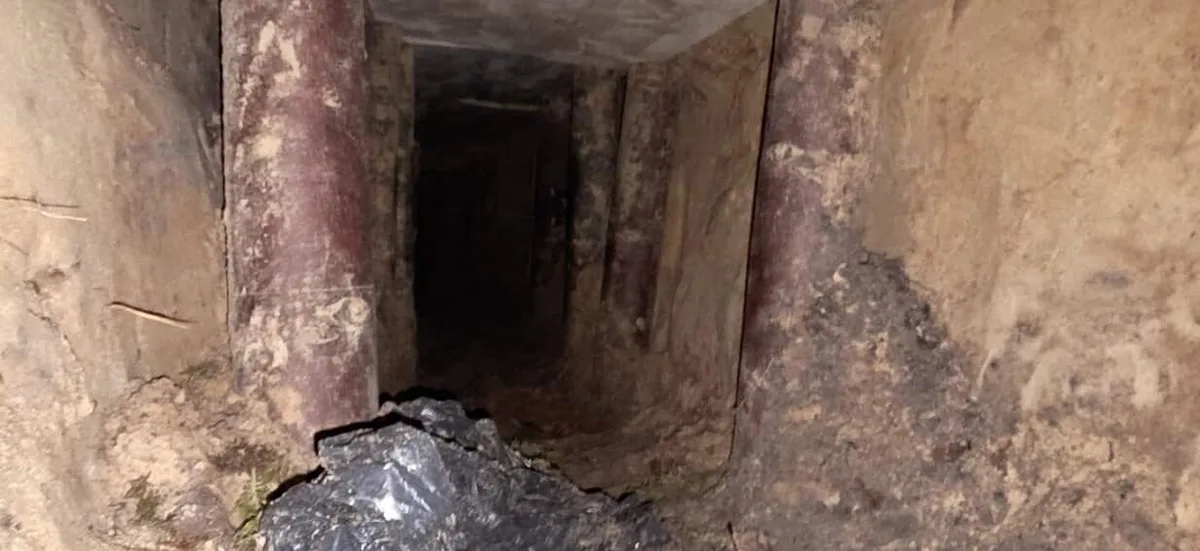
Latvia's border guard has accused Belarusian authorities of partial responsibility for a recently discovered migrant tunnel beneath a border fence between the two nations.
The tunnel was uncovered by Latvian authorities in early August. Latvia faces an increasing number of migrants trying to cross the border from Belarus, further straining relations between the two countries.
Latvia shares a 173km border with Belarus. Latvia is a member of the European Union. Belarus, an independent nation with an authoritarian government, is not.
At the time of the tunnel's discovery, Latvian Prime Minister Andris Kulbergs said criminal networks were facilitating migration from Belarus into Latvia, bringing migrants into Europe's borderless Schengen area, but that the migrants' final destination was elsewhere on the continent.
"They migrate to where it's easier (to enter the EU). So we must not be the easiest place," Kulbergs told the press conference.
Your trusted source for staying up-to-date with the world around you. Get free daily news updates and analysis, straight to your inbox.
He pledged to target networks transporting the migrants from the border to their destinations, as well as any support points for migrants in Latvia, as part of what he called "Operation Werewolf".
"If everything goes according to plan, we are confident that we will already deal a serious enough blow to the system," Kulbergs said. "I want to tell the organisers: everything will be put to an end."
Latvia's government said in a statement it would cooperate with neighbours Estonia, Lithuania, Poland and others to stop the flow of migrants.
Latvia, along with Lithuania and Poland, has frequently accused Belarus' authoritarian government of smuggling migrants from crisis-impacted regions close to the EU's far borders.
Having now discovered a second tunnel at another point along the border fence, Latvia is pointing fingers at the Belarusian border guard.
"It is simply impossible to build such a tunnel without the Belarusian border guards being aware of it," Guntis Pujats, head of the agency, told Latvian radio on Thursday.
Pujats went on to give more information about the original tunnel, saying that the entrance on the Belarusian side of the border was found around 10m from the border line and had been hidden among trees and bushes. The tunnel itself was reported to be 80cm wide and to run for roughly 30m.
Some 28 cubic metres of earth had been removed to construct the tunnel. Support structures had been erected within the tunnel to keep it from collapsing, and a plywood cover had been fitted to the entrance.
5News aggregated this summary from the outlet’s public feed. The full article, with all the context, is on www.sbs.com.au — the content belongs to SBS News - Latest.