Sam wanted a baby. This diagnosis cost him $90,000 and his relationship
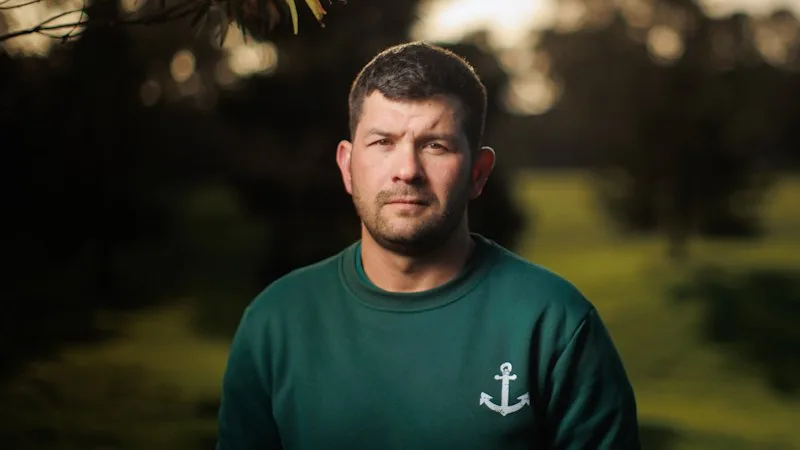
As a healthy 26-year-old, Samuel Goodwin-Dorning never had reason to doubt his fertility.
Wanting to start their family young, he and his wife began trying to conceive. After eight months passed with no luck, they went to get checked out.
When his doctor delivered the news that Goodwin-Dorning had Klinefelter syndrome, he felt numb.
Klinefelter syndrome is a genetic condition where a male is born with two or more X chromosomes and which often renders him infertile. It affects one or two in 1000 males born in Australia, yet because symptoms are so mild (they can include smaller genitals, larger breasts and less facial and body hair), it often goes undiagnosed until he tries to have a baby.
For Goodwin-Dorning, now 42 and based in Brighton in Victoria, his numbness soon curdled to rage as he processed his diagnosis and thought of all the appointments and check-ups where nothing was deemed amiss.
“I was angry that I’d slipped through the cracks all this time. I’ve been to the doctors over the years,” he says. “But no one ever picked up on it.”
Goodwin-Dorning is one of thousands of men who might be walking around without knowing they’re infertile, says Associate Professor Tim Moss, a biomedical researcher and expert with men’s health organisation Healthy Male.
Talk to any researcher, doctor, specialist or advocate, and they’ll tell you the same thing: male infertility is “a black box”.
Roughly one in six couples is affected by infertility , and despite male factors contributing to up to 50 per cent of them, remarkably little is known about male infertility. It’s only in the last decade that researchers have concluded men have biological clocks of their own .
This knowledge gap has far-reaching consequences for society. But the repercussions are also deeply personal for men like Goodwin-Dorning who were never warned their fertility might be compromised. “The only thing I wanted was to have my own children. And that never happened.”
According to the most recent data , of the IVF cycles done in Australia and New Zealand in 2024 that were due to male-factor infertility, 75 per cent had unexplained causes.
“And that’s only for assisted reproductive technology cycles too, so there’s a lot of people out there who are infertile who don’t seek help,” adds Moss, who puts it down to the “legacy” of medical research largely performed by men.
“The expectation is that women are the vessels for babies and therefore reproduction is still sort of synonymous with women’s health, but of course, it’s a false belief.”
When assessing a man’s fertility, clinicians will categorise him based on three main sperm symptoms: count, shape and motility. But from there, it often becomes a guessing game.
5News aggregated this summary from the outlet’s public feed. The full article, with all the context, is on www.watoday.com.au — the content belongs to WAtoday.