Sydney scientist behind ‘moon landing’ cancer vaccine wins top science prize
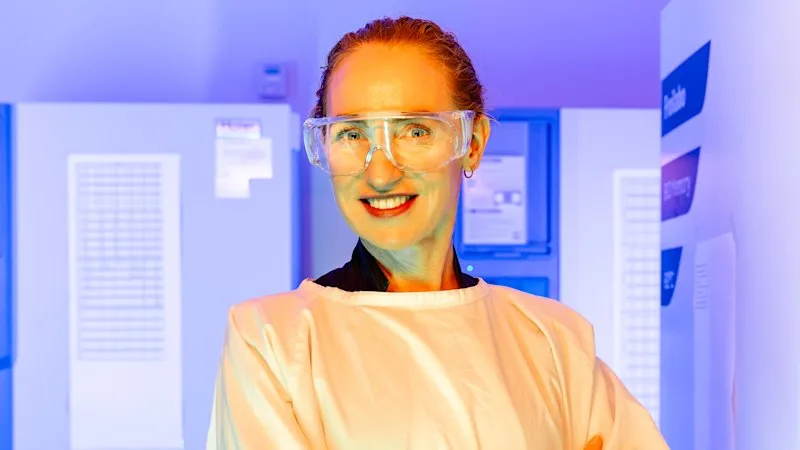
The scientist who transformed advanced melanoma into a treatable cancer and led a recent large-scale trial into a world-first personalised mRNA cancer vaccine has won the research prize at Australia’s premier science awards.
Professor Georgina Long was cautious to discuss the melanoma vaccine trial given that full results won’t be released until October, but described it as an “absolute landmark, fork-in-the-road for cancer” ahead of being awarded the Eureka Prize for Scientific Research at the Australian Museum on Thursday night.
“It represents a huge body of work and team effort, and it’s an honour, really, to represent all the people that I lead,” the former Australian of the Year said of the award.
“We’re a small but mighty country. We’ve got to keep the investments in Australia. We’ve got to take greater risks.”
Long is on a sabbatical in Lisbon, Portugal, away from her duties as medical director of the Melanoma Institute Australia at the University of Sydney to think and plan the next stages of her research.
The new vaccine, developed by Moderna and Merck, aims to prevent recurrence of melanoma after a tumour is removed. Long was the principal investigator of the phase 3 trial and said it provided “the first real data that demonstrates mRNA technology can absolutely change the face of cancer”.
Without yet providing details, the companies said on August 20 that the late-stage trial produced clinically and statistically significant improvements in high-risk melanoma patients. Moderna’s market value leapt by $62 billion in a day.
For the trial, 1137 high-risk melanoma patients were given the cancer drug Keytruda. Half also received the experimental vaccine.
Researchers sequenced patients’ tumours after surgery and identified mutations, unique to each person’s cancer, that code for abnormal proteins on the surface of cancer cells called neoantigens.
A custom mRNA vaccine was crafted for each patient based on the specific neoantigens in their tumour, teaching the immune system exactly what to look for.
Normal cells have proteins which stop the immune system attacking healthy tissue. Melanomas hijack these cellular signals, masquerading as normal cells and growing unchecked.
Keytruda stops this from happening, ripping off melanoma’s invisibility cloak.
Results presented from a much smaller phase 2 trial in June showed combining Keytruda and the vaccine led to a 49 per cent reduction in the risk of recurrence or death, compared to just the cancer drug.
As the president of Merck put it , the mRNA vaccine, called intismeran autogene, gives the immune system the scent of the enemy. Then Keytruda releases “the dogs of war”.
5News aggregated this summary from the outlet’s public feed. The full article, with all the context, is on www.theage.com.au — the content belongs to The Age - Home.