Delhi's electric tuktuk boom gets a hacking shock
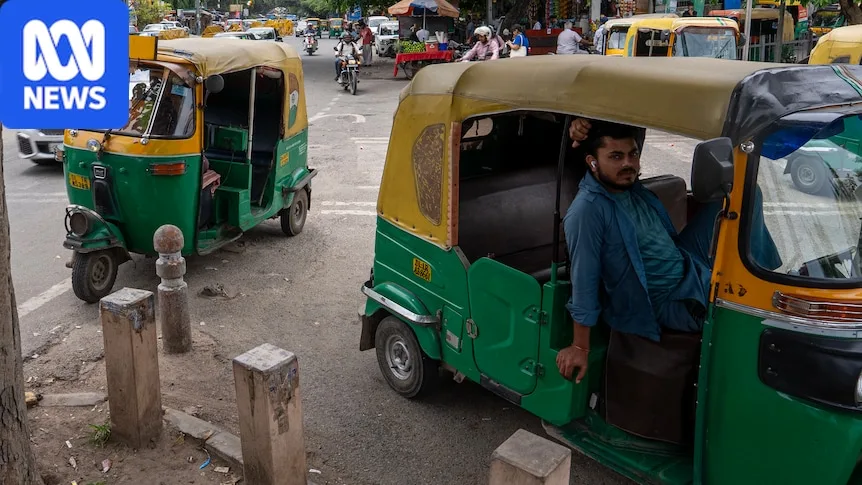
Few sights and sounds are as familiar in Delhi as colourful auto rickshaws and the rhythmic beat of their engines.
The same could be said of the Indian capital's notorious air pollution, fed in part by the three-wheelers' belching exhausts.
Indrajeet Sachdeva has been driving one for decades, earning a few hundred rupees a day.
Now, he says his career is at risk after Delhi's government announced a ban on new non-electric rickshaws from January 2027.
From April 2028, the ban will extend to new motorcycles and scooters as well, slowly replacing more than 6 million small vehicles registered in the city in a bid to clean its persistent smog.
Since the 50s, rickshaws with two-stroke engines have become notorious for their iconic tuktuk sound and smoky exhausts, contributing to harmful smog in Delhi and other large Asian cities.
India's Supreme Court mandated Delhi's rickshaws switch to compressed natural gas (CNG) in 2001 to help clean the city's air, but the problem hasn't gone away.
In 2025, air quality tracking service IQAir ranked Delhi's urban area as the most polluted on Earth.
"Estimates vary between one-third to 50 per cent [of Delhi's pollution] coming from transport," International Council on Clean Transportation (ICCT) India director Amit Bhatt said.
"We've found that CNG vehicles are not so clean when it comes to nitrogen oxide emissions, and nitrogen oxides lead to secondary particulate matter [in the air]."
Despite the persistent pollution, many rickshaw drivers still consider CNG a clean alternative to petrol and fear losing their income to another change.
"I have been driving an auto since 2002 and [an electric rickshaw] costs 250,000 to 300,000 rupees ($3,700-$4,400)," rickshaw driver Suraj Kumar Gupta said.
Mr Sachdeva, who leads a welfare group for rickshaw drivers in the city, said they were planning a legal challenge before the restrictions in January.
Regardless of the challenge, they may soon be outnumbered by others who have already switched.
5News aggregated this summary from the outlet’s public feed. The full article, with all the context, is on www.abc.net.au — the content belongs to ABC News Australia - Top Stories.