‘Too little, too late’: Data centre buffer carve-out leaves some residents vulnerable
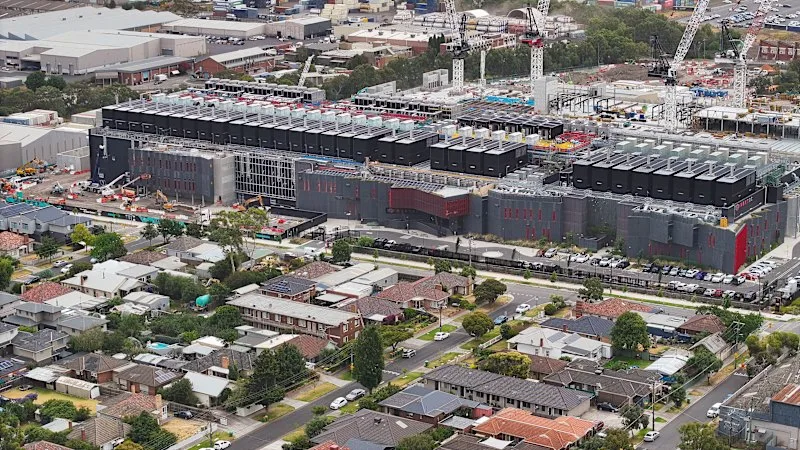
Buffer zones to keep data centres at least 150 metres from homes have arrived too late to stop three so-called hyper-scale projects in Melbourne’s west, exempting developers who lodged plans before Labor tightened the rules.
Premier Ben Carroll revealed on Tuesday Labor’s policy to ban data centres near homes , while also introducing new power, water and community investment standards for developers.
But the changes will not be retrospective. Projects already under way or which have lodged planning applications will be unaffected by them – including a data centre about 60 metres from homes. Projects yet to be approved must still be approved under existing planning rules.
At least three proposed data centre projects will breach the government’s 150-metre buffer, in communities which have protested against the AI infrastructure and raised concerns about noise, pollution and other impacts.
The Department of Planning and Transport is accepting public submissions over an application by Australian data centre giant NextDC to expand its West Footscray facility , with more computing infrastructure to be built adjacent to homes. The land the data centre sits on, zoned industrial and adjacent to a residential zone, once had small factories and warehouses on it.
Developer GreenSquare has also lodged an application to build a data centre in Spotswood which would breach the government’s 150-metre buffer – even though it is proposed for badly contaminated land that once housed Mobil’s fuel storage tanks.
A planning report for the project notes that houses are “more than 60 metres away and separated by the [Werribee] railway corridor, ensuring that the development will not result in unacceptable amenity impacts”.
Resident Jacqui Glover’s property boundary in West Footscray is just 15 metres from the edge of the sprawling NextDC data centre, which began construction in 2021 after initial approval by Maribyrnong City Council. The data centre will eventually fill almost the entire 10-hectare block.
Glover said while she welcomed the new rules, “it’s too little, too late for us in Tottenham and West Footscray”.
Another planned data centre , on land owned by the Scalzo family that sits just 200 metres to the east of the NextDC campus, was approved by the state government last year. It too faces onto housing in the same street as Glover, but will also be unaffected by the new rules.
“If Labor genuinely believes in these proposed guidelines they should be applied to every data centre development,” Glover said.
She said the 150-metre rule would not help when data centres ran their back-up generators, which generally run off diesel fuel stored on site. “Diesel emissions aren’t going to just stop 150 metres away from homes.”
The premier said the changes would prevent suburban streets being transformed by multi-level data centres, while also allowing Victoria to capitalise on the economic benefits brought by AI’s rapid expansion.
Asked if the changes were coming too late to protect neighbourhood character, Carroll said no.
5News aggregated this summary from the outlet’s public feed. The full article, with all the context, is on www.watoday.com.au — the content belongs to WAtoday.