John’s cancer patients were prescribed opioids. This key warning was missing
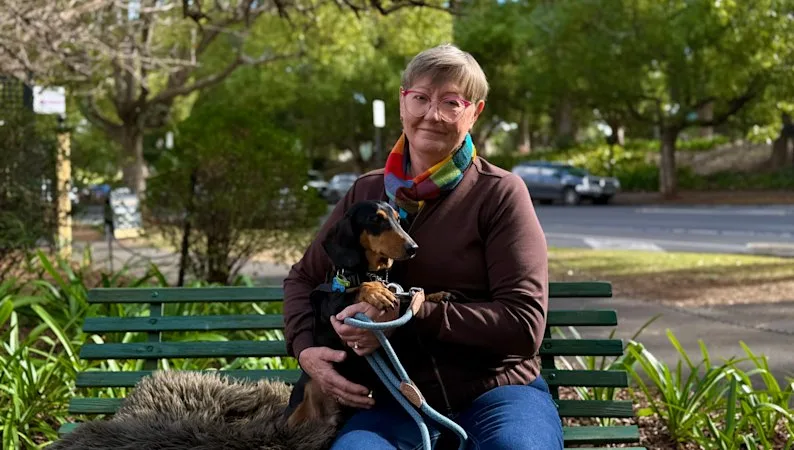
Cancer survivor Suellen Kirkegaard had been given six months to live when she was prescribed opioids, a group of strong, highly addictive painkillers.
Doctors had discovered a metastatic melanoma three years after her breast cancer surgery and treatment. Immunotherapy – then limited and expensive – offered the only hope of improving her prognosis.
“The oncologist I’d had for my breast cancer … [was able to get immunotherapy] for me on compassionate grounds,” she said. “Otherwise, six months wasn’t a lot to look forward to.”
Kirkegaard responded well to the treatment, but needed opioids to curb painful side effects; arthritis, joint pain, fatigue and regular bouts of pancreatitis.
“Without the pain medication, I just would not have been able to function at all,” she explained.
While Kirkegaard understood opioids could be addictive, it wasn’t until she met Dr John Gillett, a Toowoomba-based palliative care doctor and Queensland University of Technology PhD researcher, that she learned about the risks associated with driving.
“The medications say ‘do not operate heavy vehicles’ and I’m thinking, yeah, I’m not going to be driving a truck,” Kirkegaard said.
“It was only when he [Gillett] mentioned opioids and the capacity to drive [that it] crossed my mind.”
Nearly 3 million Australians are prescribed opioids each year. While strong painkillers such as morphine, oxycodone and fentanyl are not classed as sedatives, they can cause heavy drowsiness and fatigue.
Patients rely on health professionals to explain possible cognitive impairment, but through his research, Gillett found both doctors and pharmacists were failing to perform this duty of care.
“I [spoke] to a couple of younger women who said, ‘can we drive? Can we drop the kids off to school? I’m taking these drugs, but nobody can tell me what to do’,” Gillett said.
In one study focused on pharmacists, many discussed the risk of impairment, but did not explicitly tell patients this related to driving, assuming they would make the connection themselves.
“No, I probably never ask if they are driving or not,” one pharmacist told Gillett, continuing that they encourage patients to “decide how impaired you are and then you decide if you think you’re right to drive”.
Another pharmacist implied that GPs bore greater responsibility to manage driving and opioid use: “I’ve even seen them drive their car and they haven’t even been able to walk in the door, so to me they shouldn’t be driving,” they said.
5News aggregated this summary from the outlet’s public feed. The full article, with all the context, is on www.watoday.com.au — the content belongs to WAtoday.