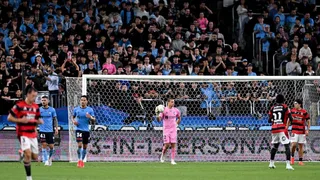
The deep reaction among Swans fans is the disgust at having been sold a lie. Can they fix it?

This was the year we went all-in on the Sydney Swans, buying the membership package and attending as many games as possible. A Swans game – usually a Swans win - became part of the weekend routine.
It’s a very Sydney occasion, drawing nearly 40,000 people on average, bigger than any rugby league game in the city, festive and feminised, with a roughly 50/50 gender split that is unique among male spectator sports.
Most of the Swans fanatics I know are women , and it is my wife’s enthusiasm that drew us to Swans membership.
When we met, she didn’t want to become a complete sports-watcher’s widow, so she picked out one sport and one team. She saw AFL as the most female-friendly code. She’s been a Swans tragic since. Her latest favourite? Isaac Heeney, of course.
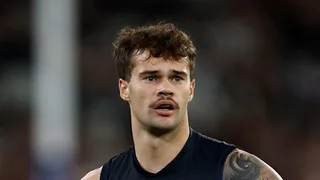
The Sydney Swans are a jewel in the AFL crown, and Heeney is its most sparkling facet .
Before every game, when the players are announced individually, the cheers for Heeney are the loudest and the highest-pitched.
Two weeks ago, against Port Adelaide, the players’ names were read out by children, a cute touch to enhance the bond between innocents and their idols.
Do fans project too much idealism onto their stars? Sure, but the Swans have squeezed and monetised every last drop out of it.
As the resident grizzled male, it was my duty to issue warnings that heroes have feet of clay.
Only rarely are they who we want them to be. I’d read Brandon Jack’s exposés of a Swans “culture” that, behind the no-dickheads rhetoric, had barely evolved from David Williamson’s The Club .
But the Swannies kept sucking you in, women and children first. The Bloods’ incredible on-field consistency, their embrace of Sydney’s queer community: this was a brand engineered to appeal outside the traditional male box.
The AFL has found that there’s money in virtuousness. The Swans’ success in commodifying their virtue was what made them so unpopular elsewhere within the AFL, much of which is choking, as we speak, on its schadenfreude.
When “culture” is turned into a commodity that is successfully financialised, it soon ceases to be a culture in any real sense; it’s a product, and its weak point is that its saleable goods, humans, are not widgets or soup tins. The manufacturing processes of the “football industry” haven’t got these products; it’s family, school, friends, inherited and learnt attitudes, sudden celebrity, the hot mess of life that makes young men.
What if the “culture” becomes just a role they are taught to play and a formula of words that they are taught to speak, with shallower roots than the complex brew to make a young male in Australia in 2026?
5News aggregated this summary from the outlet’s public feed. The full article, with all the context, is on www.brisbanetimes.com.au — the content belongs to Brisbane Times.