Harm done now can be harm forever; how government delay can derail lives
Rod Glover, whose late wife, Peta Murphy, chaired the committee that delivered the report into online gambling that drove so much of the later debate, issued a statement last week after the government had passed its legislation. He began by strongly emphasising hope. Glover did not want the flaws in what had been done to prevent recognition of “progress”, a “big improvement on the status quo”. That progress was a reminder that agreement could still be reached in politics – which may in turn, he suggested, be a way of rebuilding trust in democracy.
But Glover, who has been restrained in his public commentary, was also transparent about its shortcomings: it was “far from everything that is needed” and fell “well short of the Murphy Report recommendations”. This was a sign of the power of those lobbying against change, which demonstrated a “failure of social leadership among some of our major sporting and media institutions”.
Glover also said it “has taken too long to get here. That delay has had real human consequences”.
Those last three words are quietly devastating, if you take a minute to consider their meaning: the lives that have been derailed in the time governments did not act. They reminded me of something written by philosopher Luara Ferracioli about inequality and the pace at which governments address it . For a government, waiting a year or two can seem inconsequential. In a life, those years can be decisive. As Ferracioli writes, if you don’t have kids now, you might never. If your schooling is poor, you might not get that next job. Harm done now can be harm done forever. The problem with going slowly is that it “fails to take seriously the fact that every citizen is only a child once, a young person once, a young adult once”.
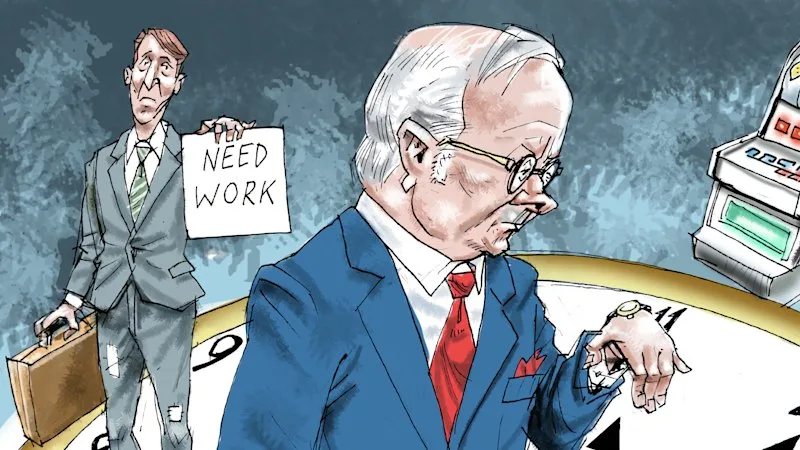
Also last week, we learnt unemployment had risen. The increase was small, but the rate has been rising for some time. In terms of the economy, the picture is mixed: many jobs have also been created, and the rate remains reasonably low.
Small consolation for the people represented by those numbers, for whom that event might be defining. A growing number of those on the JobSeeker unemployment payment have been on it for five or more years. Even if your time without a job is more temporary, in Australia it can be devastating. That is because the payment you will receive is so paltry. Some countries tie such payments to previous income. Australia doesn’t – in fact, as a replacement for income lost, our payments are right near the bottom of the table of rich nations . You are effectively removed, instantly, from the life you lived before – a dramatic event that can be paralysing and shaming.
Our poor international standing here is one point made in a paper soon to be released by the Australian Council of Social Service (ACOSS). It makes the point that in Australia our payment isn’t tied to wages at all – not even average wages across the country. Instead, it’s tied to inflation. In the past few years, with inflation roaring, that might seem OK.
5News aggregated this summary from the outlet’s public feed. The full article, with all the context, is on www.smh.com.au — the content belongs to Sydney Morning Herald - National.