Children’s picture books reflect changing attitudes to languages and can support revitalisation
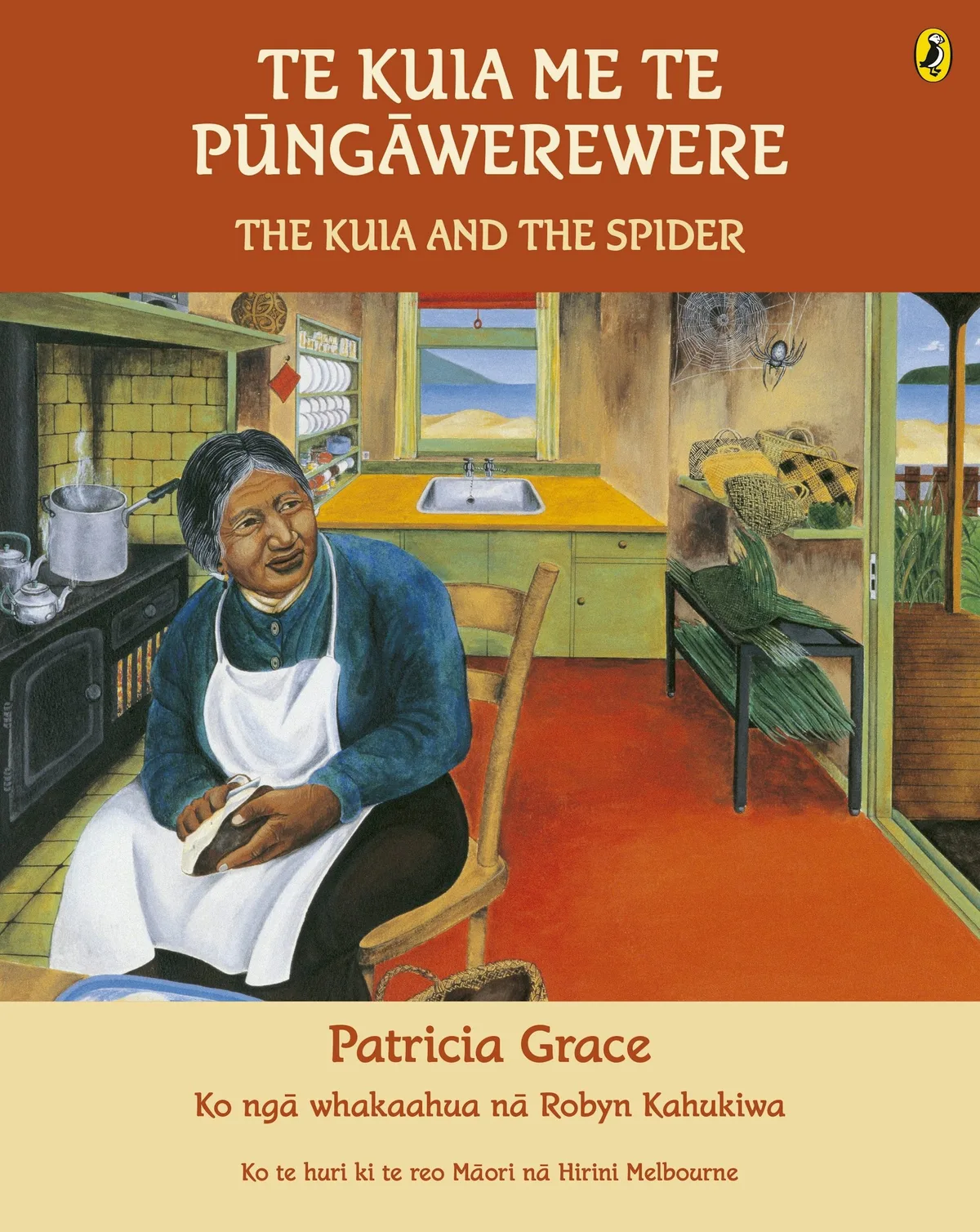
Detail from the cover of Te Kuia me te Pūngāwerewere, written by Patricia Grace and illustrated by Robyn Kahukiwa.
Author provided , CC BY-SA We know from a wealth of research that children’s picture books support language learning.
During a fellowship at the International Youth Library in Munich , I had an opportunity to examine how languages are represented in multilingual picture books and how their use can reflect their changing status in a society.
This is relevant for New Zealand because the use of te reo Māori in children’s picture books has been increasing since the 1970s, reflecting its reclamation and revitalisation — and I suggest playing an important role in this process, too.
The picture books I analysed in my time at the Youth Library featured as many as 11 languages in one book and were from a range of countries, including South Africa, Poland and Norway.
I found that in those books the languages with larger populations of speakers were typically positioned first, and the order of subsequent languages often followed the relative number of speakers in each country.
By giving languages with fewer speakers less prominence , these picture books were reflecting the status quo.
New Zealand picture books featuring Māori and English use a range of approaches to represent the two languages .
This shows picture books can be used to support changing attitudes to languages.
The rise of te reo Māori The use of te reo Māori has increased in trade (commercially available) picture books published in Aotearoa since 1970.
The presence and relative space given to te reo Māori and English has also changed over the past 50 years, reflecting changes in the status of the two languages .
The cover of Crayfishing with Grandmother gives the impression it could be in English only.
Author provided , CC BY-SA In 1973, when te reo Māori was not yet an official language in Aotearoa , Crayfishing with Grandmother – written by Jill Bagnall, illustrated by Barbara Strathdee and translated by Hapi Potae – was first published.
The cover of the book only shows the English title, giving the impression it could be a monolingual picture book.
5News aggregated this summary from the outlet’s public feed. The full article, with all the context, is on theconversation.com — the content belongs to The Conversation Australia.