The same thing killed 43 per cent of these astronauts. Scientists have a theory
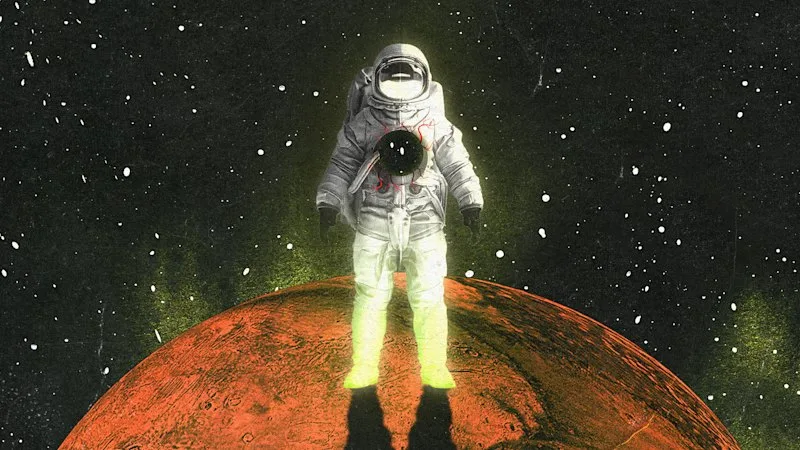
A 2016 study reached a shocking conclusion for those who dream of space travel: going to the moon might cost you your heart.
Researchers wrote in Scientific Reports that 43 per cent of the Apollo astronauts who travelled beyond Earth’s protective magnetic field, exposing themselves to the harsh radiation of deep space, had died of cardiovascular disease.
For astronauts who went only to low-Earth orbit and didn’t fully leave the “magnetosphere”, the rate of death from heart disease was 11 per cent.
The authors concluded astronauts who went to the moon were four to five times more likely to die from heart disease. This risk calculation was heavily disputed, with an obvious limitation being the tiny sample size of Apollo astronauts who had died at the time (seven).
Follow-up papers argued the risk assessment was skewed because researchers didn’t properly account for risk factors such as age, and the fact one of the astronauts had existing heart issues separate to his exposure to deep space.
Nevertheless, the research focused attention on an indisputable problem: the radiation-lashed, zero-gravity wilderness of space exerts dangerous pressure on our soft, Earth-adapted mammalian bodies.
The Apollo astronauts and the recent Artemis II lunar visitors were only beyond the Earth’s magnetosphere for a matter of days.
As the ambitions of Elon Musk, the Australian Space Agency and NASA shift to long-term lunar habitation and travel to Mars, knowing whether the body can cope with months-long deep-space missions has never been more critical.
One of Australia’s leading cardiologists, having investigated just that issue, found the effects of such missions could be catastrophic.
“An enormous amount of effort and money and resources has gone into developing the hardware and rocketry to get humans into space, whether it’s SpaceX, Blue Origin, or NASA’s Artemis missions,” says Professor Jason Kovacic, chief executive of Sydney’s Victor Chang Cardiac Research Institute and life-long space nerd.
“Far, far less attention has been paid to the human body and what that’s going to have to endure.”
Put another way: what’s the point of billion-dollar rockets if all the crew are toast?
With collaborators at the Icahn School of Medicine at Mount Sinai in New York, Kovacic co-led new research in Clinical and Translational Medicine scrutinising how our hearts might fare on a long-term mission to the moon or Mars.
Space radiation, he says, emanates from stars and blasts from supernovae that have strewn the universe with a deadly web of galactic gamma rays.
5News aggregated this summary from the outlet’s public feed. The full article, with all the context, is on www.brisbanetimes.com.au — the content belongs to Brisbane Times.