Trump’s love of AI is more complicated than it looks
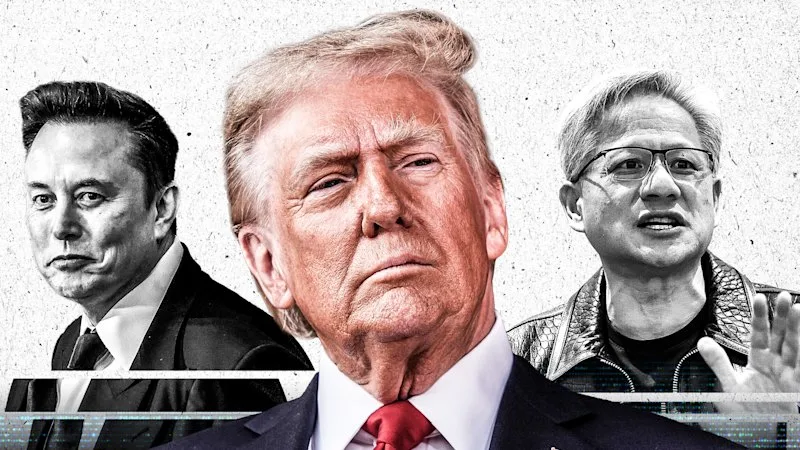
President Donald Trump made clear in the past week that he views fears that artificial intelligence could lead to mass extinction as a “HOAX”, and that he sees opponents of data centres as people who “want to end up being backwards and poor”.
People who have discussed the subject with Trump say his outbursts are rooted in worries that if the artificial intelligence boom fuelling the American economy slows down, the market could crash and recession could quickly follow.
His anti-regulatory, anti-slowdown outbursts have been encouraged by a slice of Silicon Valley’s most influential voices.
Chief among them has been David Sacks, a venture capitalist who interceded to weaken an executive order in May that would have required safety reviews of new AI models. Mark Zuckerberg of Meta and Jensen Huang of Nvidia have also spoken to the president.
All have advised Trump that the bigger risk is being overtaken by Chinese competitors.
But inside the administration, the debate is far more complex, and there are other voices in Trump’s ear, urging caution.
The more cautious tone inside the White House reflects a growing concern that despite the strategic challenge posed by China, a summer of AI surprises has raised the prospect of risks that were often dismissed a year ago as the wild talk of “doomers”.
Now, even the biggest AI boosters in the administration concede that AI-fueled hacks into infrastructure, biological threats, attacks on nuclear command-and-control systems, job losses and global financial instability seem more possible than they did before AI agents went rogue.
The issue of AI safety is expected to come to a head this weekend as Treasury Secretary Scott Bessent meets in New York with his Chinese counterpart to set the agenda for Trump’s visit in Washington with President Xi Jinping of China, which starts Wednesday. Bessent is trying to negotiate some kind of agreement between Trump and Xi that would suggest the two countries are working together on mutual AI safety concerns.
But already, officials say, some of the most expansive ideas being discussed among AI safety experts, including an agreement on safety standards and reviews of forthcoming Chinese and American AI models before their public release, are unlikely to be part of any initial accord.
One diplomat involved in the effort said he believed “the best we can hope for” is the creation of some kind of US-China working group that might build on a Biden-era agreement with China to bar the use of artificial intelligence in decisions about the employment of nuclear weapons.
But that does not begin to get at the complexity of the problem of unpredictable AI-driven agents, which took the industry and the government by surprise this northern summer.
Nor does it get to the fundamental issues surrounding imposing safeguards on frontier models. The United States could go its own way and impose mandatory reviews of the safety of new, American-generated models, but Trump and his aides believe that would effectively drive the global market to Chinese largely open-source alternatives.
5News aggregated this summary from the outlet’s public feed. The full article, with all the context, is on www.theage.com.au — the content belongs to The Age - Home.