Lotus Esprit: More details emerge, including V6 option
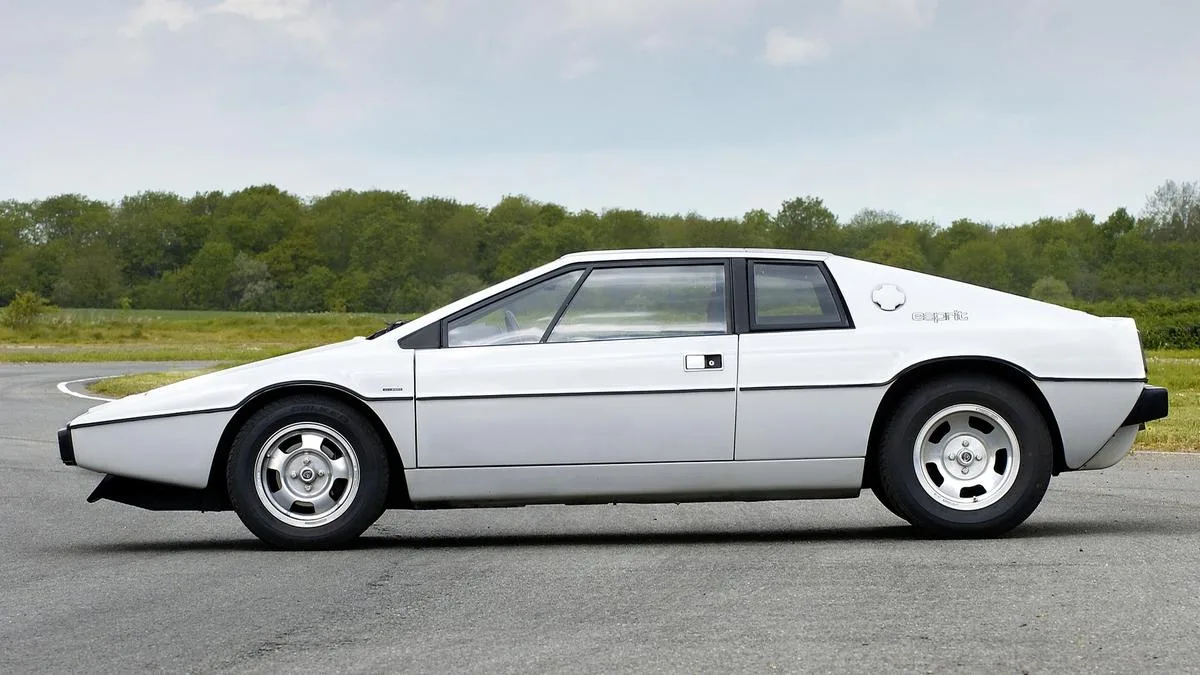
More details about the Lotus Type 135 supercar, widely tipped to revive the Esprit name, have been revealed.
During a call with investors discussing the automaker's second-quarter results, Lotus CEO Feng Qingfeng revealed to Autocar and others the company has a target weight of 1500kg for the Esprit V8 hybrid.
Mr Feng acknowledged that "achieving that target with an 800V architecture, a hybrid system, a V8 engine and electric motor in [the car] just is not easy". He also noted employing a hybrid drivetrain would allow the vehicle to meet emissions standards around the world while also "preserving essential Lotus DNA of lightweight engineering and extreme track-focus driving dynamics".
🚘 Don’t just read about your next car. Find a great deal with CarExpert.
To help keep weight in check Lotus will apparently use lightweight electric motors, each tipping the scales at around 20kg. While some other supercars, such Ferrari 296 GTB and Lamborghini Temerario, are plug-in hybrids, the Esprit will be a hybrid, and thus have a smaller and lighter battery pack.
For reference, the 3.0-litre twin-turbo V6 Ferrari 296 GTB has a 7.45kWh battery and weighs around 1540kg, while the 4.0-litre twin-turbo V8 Lamborghini Temerario has a 3.8kWh battery pack and weighs 1690kg.
Total power output for the Esprit is said to be over 746kW or 1000 horsepower, and the car will use an eight-speed dual-clutch automated transmission capable of handling large dollops of torque.
Lotus is also developing a V6 hybrid-powered successor to the Emira. Mr Feng revealed this drivetrain will also be available in the Esprit, but didn't reveal any details about this powertrain.
The company currently uses Mercedes-AMG four-cylinder and Toyota V6 engines in the Emira, but it is moving away from both external suppliers.
Both the new V6 and V8 engines are being developed in conjunction with Horse, a joint venture between Renault and Geely, which owns a controlling 51 per cent stake in Lotus.
The next-generation Emira and the Type 135 supercar are part of the company’s new Focus 2030 plan, which includes Lotus setting itself a more realistic sales target of 30,000 cars per year. In 2025, the company made just 6520 vehicles and is nowhere close to meeting the 150,000 sales target laid out in its Vision 18 strategy.
At the turn of the decade Lotus, like many other automakers, planned to go all-electric by 2030, with the Emira being the company’s last ever petrol-powered car. Now Mr Feng admits the company “did act too fast”, and that “is why we made a change and decided to go hybrid”.
While the company's electric Eletre SUV and Emeya sedan are made in Wuhan, China, its sports cars are produced in the Hethel, in the UK. This setup will continue with the generation of cars, with the Esprit set to share factory space with Emira.
Mr Feng sees the Ferrari 849 Testarossa as the Esprit's main rival. The Testarossa has a starting price of $932,648 before on-road costs in Australia.
5News aggregated this summary from the outlet’s public feed. The full article, with all the context, is on www.perthnow.com.au — the content belongs to PerthNow.