Trump and Kim's renewed bromance stirs new and old threats for Australia
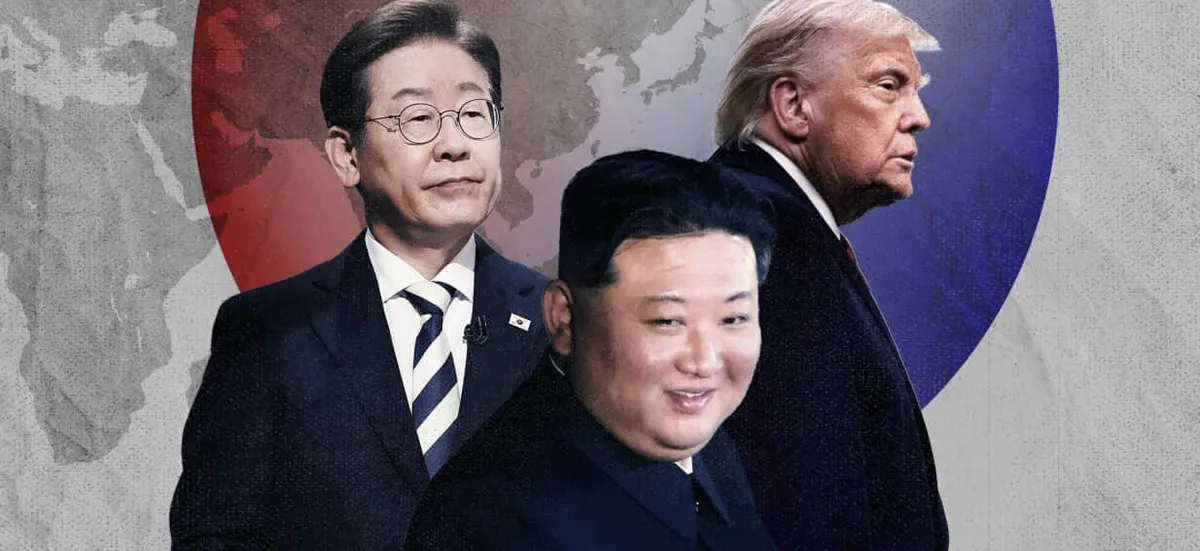
Donald Trump's recent appeals to the reclusive North Korean dictator Kim Jong-un have cast doubt on the United States' commitment to its allies in Asia and the Pacific — potentially adding to regional instability, experts worry.
Trump has also reignited fears about North Korea's nuclear test program and whether the US would ever back down on opposing the nation's weapons, which would have broad ramifications.
A decision by the US on Monday to "substantially reduce" the scope of ongoing joint military exercises with South Korea and Japan may have sent a ripple of doubt about the strength of the many interlinked defence ties in the region, and caught some off guard.
Trump announced the decision on social media , saying the exercises were costly and "send a signal that is totally inappropriate and hostile" to North Korea. The totalitarian state had previously complained about the joint military drills, saying they would respond with a new level of deterrence.
But the decision, which came somewhat out of the blue, was made at the same time as Trump is signalling plans to meet with the North Korean leader, raising questions about where their unusual relationship actually sits.
Your trusted source for staying up-to-date with the world around you. Get free daily news updates and analysis, straight to your inbox.
South Korean president Lee Jae Myung said on Wednesday he recognised Trump's "will and efforts to create conditions for dialogue" with North Korea through the reduction of the exercise.
"President Trump's message this time feels like a major decision made with careful consideration to create peace on the Korean Peninsula, moving beyond hostility and confrontation," he wrote on social media.
Joshua Kurlantzick, senior fellow for Southeast Asia and South Asia at the US think tank the Council on Foreign Relations, told SBS News the US decision was in one way unsurprising, given its stated foreign policy shift away from global hegemony and toward influence over the "Western hemisphere" alone.
However, he said it was another significant step toward the potential "fading" of the US defence umbrella as allies "no longer feel" that umbrella is as "reliable as it used to be".
"As a result, and this includes Australia, they are taking various measures." He said this includes strengthening regional defence ties and increasing military spending.
That said, United States Studies Centre CEO and former National Security Council director for Asia, Michael Green, told SBS News that "the hub-and-spoke" US regional strategic alliance network "survives" the Trump administration as there's "no other option".
He said the multi-layered "networking of these traditional US allies is necessary" to counter the risks of a rising China and a loss of US maritime dominance in the Pacific.
"That alone explains 80 or 90 per cent of why you have the Quad [the security alliance between Australia, India, Japan and the US], why you have AUKUS , why you have the US-Japan-Australia trilateral," he said.
5News aggregated this summary from the outlet’s public feed. The full article, with all the context, is on www.sbs.com.au — the content belongs to SBS News - Latest.