64,000 shades of grey: How dentists, running coaches and restaurants are using AI
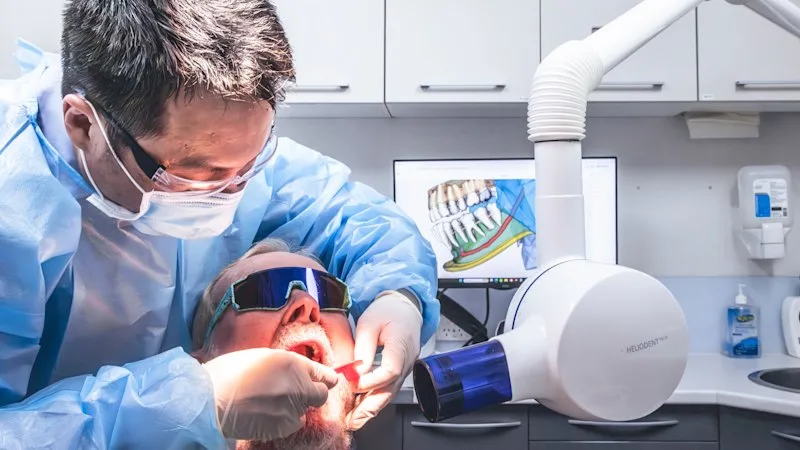
Dentist Sen Le says he is not afraid of losing his job to AI: a technology he has helped to develop, and one which he says can detect problems in a patient’s mouth that most human dentists would miss.
“The human eye can only see about 40 shades of grey, but the AI can see about 64,000,” he says. “That means it’s able to see things that we can’t: subtle changes in anatomy and subtle changes in disease. Often, it will find something that I didn’t even notice was there.”
While there is debate about the extent to which AI could destroy human jobs or create new ones, the technology is already well documented to be changing the nature of roles in various industries including administration, law and media.
But it is also being used – and developed – by people in more hands-on professions ranging from dentistry to run coaching and restaurant management, some of whom say AI is improving the services they offer to customers but will never replace them.
Le started working on software called Eyes of AI six years ago to save dentists time and help them make more consistent and accurate diagnoses.
“Dentists and dental professionals are very time poor,” he says. “There’s also a lot of variability in our diagnostics: if you go to five different dentists, you get five different diagnoses, and then the treatments they recommend could range from $300 up to $36,000.”
The Sydney-based dentist, who also works in Canberra, has used the technology over the past three years with his patients and says it can identify issues ranging from defective fillings to infected abscesses and calcification – the build-up of excess calcium – in places not just isolated to the teeth.
The AI tool can work with as little information as a single X-ray to make basic findings, but can also consider other clinical information fed into it.
“It’ll detect issues such as tooth decay early so that we can address it very conservatively rather than drilling into the patient,” he says. “I also use AI as a second set of eyes – like a spell check – to make sure that I haven’t missed anything, especially if I’m busy or running late.”
Le and his team have been partnered with the CSIRO and the University of Sydney, and while tighter regulation has made the approval process less straightforward, he says the business is on the verge of getting the technology approved for release to other clinics around Australia.
AI can also enhance patients’ understanding, Le says, helping them to take more ownership over their treatments.
“Often, patients are just taking the dentist’s word for what’s there,” he says. “But the colour overlays generated by the AI, and the things it flags, can help patients look after their oral health better.”
While Le believes AI will increasingly play a supporting role in dentistry in years to come, he says it will not dampen demand for dentists.
“It’s a very human thing to go into someone’s mouth,” he says. “And at the end of the day, AI requires human oversight because it can’t be held responsible for decisions. I don’t believe it’s possible for AI to replace dentists.”
5News aggregated this summary from the outlet’s public feed. The full article, with all the context, is on www.brisbanetimes.com.au — the content belongs to Brisbane Times.