Nepal’s devastating floods: 10 seconds could save lives
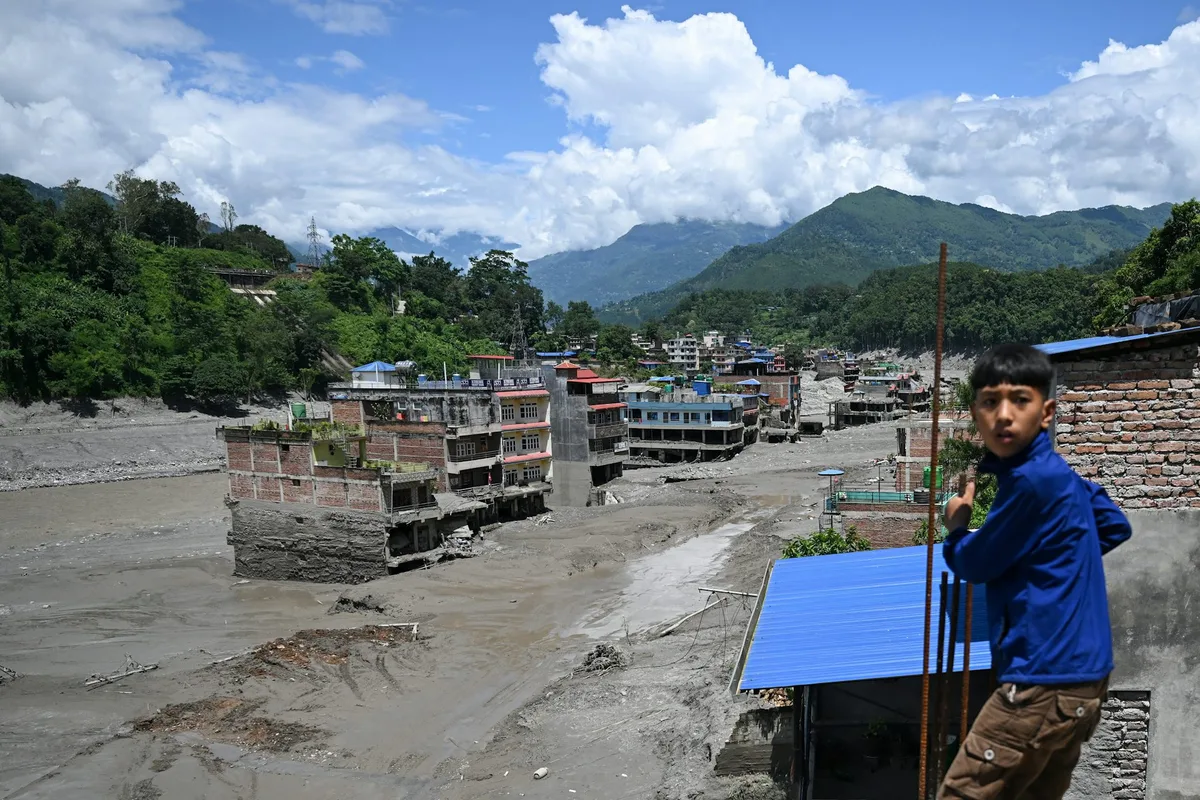
Arun Sankar/Getty Images At around 8:45am on August 26, Karbir Gaire, a customs and information officer at Nepal’s Rasuwa Customs Office, suddenly felt what seemed like an earthquake.
He went outside, looked towards China and saw a huge flood accompanied by dust.
He shouted, “The flood is coming, run!” Gaire and others immediately ran uphill.
About 10 seconds later, the muddy water swept away the structures around him.
Gaire later told local media outlet Ratopati those 10 seconds were decisive: people who recognised the danger and ran towards higher ground survived.
Others who delayed or ran elsewhere were swept away, or went missing.
His experience captures a potentially life-saving truth: a warning only saves lives if it produces immediate action.
For Australia’s Nepalese community, including me and my family, this disaster is deeply personal.
Families and friends across Australia are waiting anxiously for news of loved ones.
But beyond the immediate devastation, the disaster raises an important question: could lives be saved if people were trained to act immediately when a flood warning arrives? I believe the answer is yes.
Disaster in Nepal The devastating August 26 flood originated in the high Himalayas near the Nepal-China border and sent a massive surge of water through the Bhote Koshi and Trishuli-Narayani river systems.
Hundreds of people have died, and many remain missing in Nepal and Tibet .
At least 39 Australians have been reported missing.
It is important not to portray this disaster simply as a failure of warning.
5News aggregated this summary from the outlet’s public feed. The full article, with all the context, is on theconversation.com — the content belongs to The Conversation Australia.