To gain a better understand of Vietnam, this is the place to visit
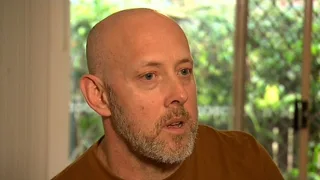
The eye contact is a little disconcerting. Buddhist master Thich Truc Tu Kien holds my gaze like a taut rein, demanding attention as he shares his wisdom, almost daring me to lose focus. The crinkles around his sparkling, clear eyes deepen as he grins, making a joke that transcends the unfamiliar flicked-rubber-band cadences of the Vietnamese language.
“Today, we are lucky we have a chance to sit here in this palace and learn about Zen meditation,” our translator repeats in English. “But do you know how to sit in the right posture?”
From a kneeling position, we shuffle awkwardly, imitating the master as he effortlessly moves his legs into a lotus position, his golden robe cascading to the floor. We giggle in our universal failure, some of us unable to place their foot on their thigh, others toppling from the ungainly effort.
“The Buddha sat in lotus posture for 49 days continuously,” the master continues. “After that he got enlightenment. This posture helps you to be very stable as you meditate, even if you fall asleep, you don’t fall down. Your back is straight, and it helps your mind stay awake.”
It’s not every day you tour a religious complex with a practising monk, but master Thich Truc Tu Kien joins our group as part of BestPrice Travel’s “One Journey – Two Heritages” tour of north-eastern Vietnam. It’s a mindful venture into the spirituality and history of Hanoi and its surrounding area.
Get exclusive travel deals delivered straight to your inbox. Sign up now.
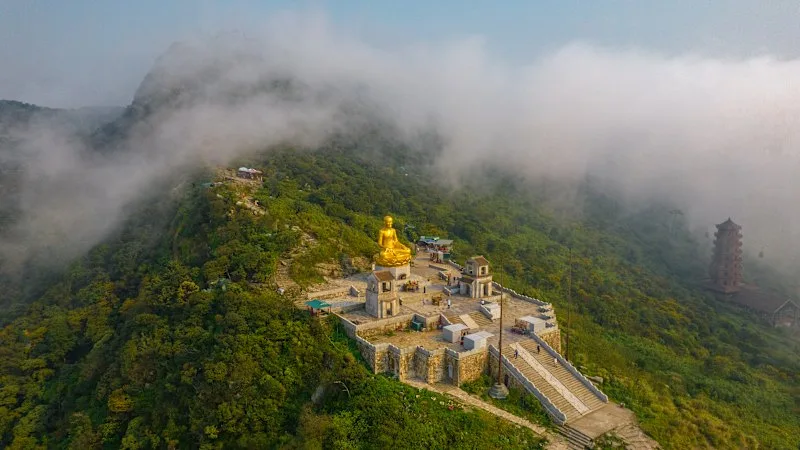
Located in Quang Ninh Province, a three-hour drive from Hanoi, the tranquil forest-swathed peak of Yen Tu, rising to 1068 metres, is considered the birthplace of Vietnamese Zen Buddhism.
Inscribed by UNESCO as a World Heritage cultural site in 2025, this complex of historic temples and pagodas is a popular destination for pilgrims seeking a deeper understanding of, arguably, Vietnam’s most visible organised religion, practised by at least 14 million people.
We meet the master at the foot of the mountain, in the lobby of Legacy Yen Tu MGallery hotel, a creation of wunder-architect Bill Bensley, which conceals five-star opulence behind the rustic facade of a recreated 13th-century monastery.
Sadly, the weather gods are against us, with howling winds and monsoonal rain putting a dampener on our plans to reach the mountainside temples by cable car.
Instead, the master will conduct a private ceremony in Truc Lam Palace, a cavernous reception hall adjoining the hotel that can host up to 2000 devotees. After sounding a gong and chanting, the master asks us to sit cross-legged while he tells the story of the creation of this uniquely Vietnamese sect of Buddhism, dating back to the 13th century.
Born in 1258, King Tran Nhan Tong was the third emperor of the Tran dynasty and a devotee of Buddhism from an early age.
After twice saving Vietnam from the Mongol-led Yuan dynasty and becoming a national hero, the 35-year-old king gave up the throne to become a monk, spending five years studying on the slopes of Yen Tu mountain.
5News aggregated this summary from the outlet’s public feed. The full article, with all the context, is on www.brisbanetimes.com.au — the content belongs to Brisbane Times.