Phones and computers are about to be more expensive — thanks to AI
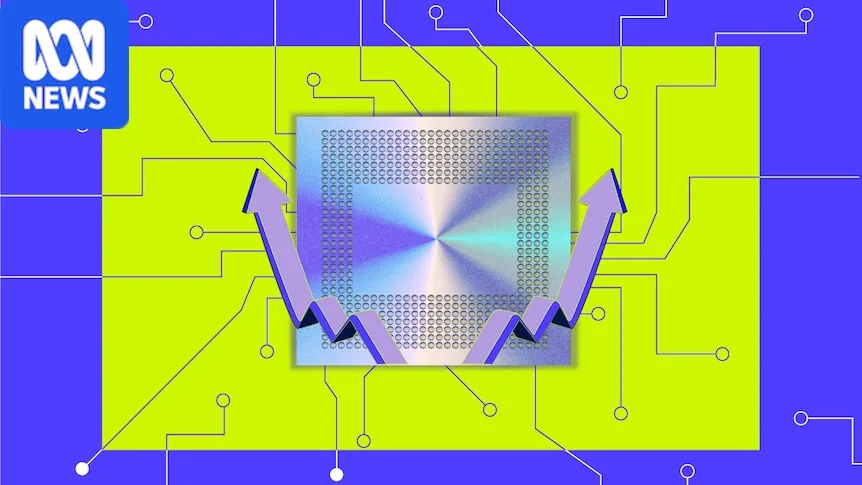
Beneath the surface, smartphones contain thousands of individual parts.
Lurking behind the screen, the battery, the speakers and the camera, a single chip is the main thing keeping your phone running.
This is the dynamic random-access memory chip (DRAM), the short-term working memory inside your phone.
It's what lets you switch quickly between apps while your phone processes information.
And if you're looking to buy a new phone, this chip could be the reason it's about to cost you a whole lot more.
The rise of AI data centres is making memory chips a scarce commodity and consumers are paying the price.
Those same DRAM and NAND chips also live inside your laptop, desktop computers and gaming consoles.
Last year, NAND and RAM memory were both incredibly cheap. At one point, a 16-gigabyte RAM chip cost as little as $4.76.
But that began skyrocketing in late 2025 and that same chip could cost you almost $60 as of June, according to the WA Data Science Innovation Hub (WADSIH).
The budget smartphone market is the latest victim of the global shortage, with multiple tech bosses saying memory chips are now their most expensive component.
Samsung has already hiked the price of its phones and its tablet line-up, making devices with higher storage up to $115 more expensive.
Microsoft, Google and Apple have also raised the price of several different phones, computers and tablets over the past few months.
In February, video game developer Valve announced it was pushing back the launch of its newest hardware due to uncertainty about memory.
Then in June, it revealed its Steam Machine would cost $US1,049 ($1,511), hundreds of dollars more than the pre-shortage price estimated by several industry outlets.
5News aggregated this summary from the outlet’s public feed. The full article, with all the context, is on www.abc.net.au — the content belongs to ABC News Australia - Top Stories.