Phil wanted to rent a shop in Footscray. The owner would rather it sits empty
During five years’ trading in Melbourne’s west, Phil Gaby’s business has had just as many homes.
Nan’s Bakehouse began at the markets, then moved to Footscray Plaza before expanding into the business next door. A coffee van followed, then a new store in Moonee Ponds – before its closure, when they ran into financial strife.
Despite failure and two evictions, Nan’s endures in Footscray – one of Melbourne’s toughest places for businesses to thrive, a new Property Council of Australia report suggests.
“After we failed at Moonee Ponds, I realised that success meant the community and the people,” he said.
“Even our store now has been held together by people from our old store, continually following us around because they believe in the same things we do.”
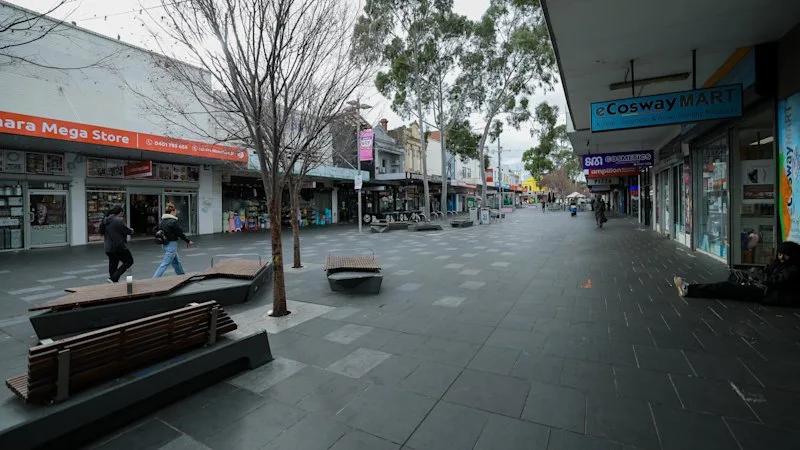
Despite a $1.5 billion investment in the new Footscray Hospital – and millions more in transport, education, and sporting and social infrastructure – the inner-city suburb has stalled, the Property Council found in its Revitalising Victoria’s priority precincts report, in large part due to land banking .
“I applied for one place on Barkly Street, and it has been empty for two years now … The owner said he did not want to spend any money, and he’d rather leave it sitting empty,” Gaby said.
“He was concerned that, if the business went bad, then that’s his loss. That’s how he looked at it. Whereas before, a landlord would look at it as an investment.”
Footscray’s land banking issue is symptomatic of a more complex problem, whereby high construction costs, elevated taxes and charges, expensive finance and subdued apartment values are deterring landowners from developing projects, the Property Council found.
New apartments in Footscray average $100,000 less than Melbourne’s median apartment price, making it difficult for developers to justify new builds when construction costs remain high, KPMG urban economist Terry Rawnsley said.
High costs were also accompanied by a 1297 per cent increase in approved dwellings in central Footscray in the 2022-23 financial year, compared with the previous year (908 dwellings from 65).
A similar pattern emerged in the 2024-25 financial year (with 704 approved dwellings, compared to the previous year’s 38), helping to keep prices down.
The Property Council suggests that if prices continue to fall with federal tax changes, this could be replicated across Melbourne and undermine the feasibility of new projects.
“Developers are likely to be holding sites and waiting for feasibility to improve,” Rawnsley told The Age .
5News aggregated this summary from the outlet’s public feed. The full article, with all the context, is on www.watoday.com.au — the content belongs to WAtoday.