Larvotto rolls out first concentrate from NSW antimony-gold mine
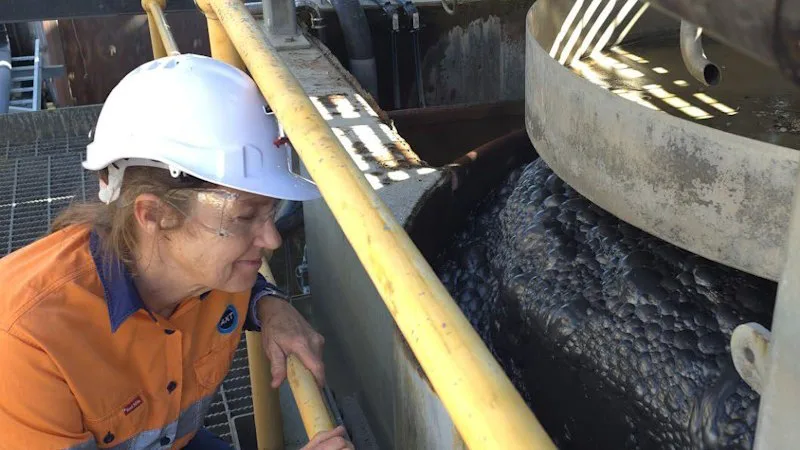
In kicking off antimony-gold concentrate production from its freshly refurbished Hillgrove mining operation in New South Wales, Larvotto Resources has officially joined the ranks of Australian producers.
The company says it has successfully commissioned the processing plant’s flotation circuit and concentrate filter presses, allowing it to produce its first saleable product just a month after restarting operations. The milestone clears the way for Larvotto to begin delivering into binding offtake agreements it has already secured with commodity trading giants Wogen Resources for its antimony and Glencore International AG for its gold.
Over its planned initial eight-year mine life, Hillgrove is forecast to produce 4900 tonnes of antimony and 40,500 ounces of gold per annum.
The antimony concentrate, cleaned to a 60 per cent product specification, is covered by a binding seven-year offtake agreement with Wogen Resources. The deal gives Wogen exclusive global sales rights for all antimony produced from Hillgrove during the period. Larvotto says Wogen representatives travelled from the UK to witness the company’s first concentrate production, a solid vote of confidence in the newly commissioned operation.
A separate binding agreement will see all gold concentrate produced during the first seven years of mining sold to Glencore, covering an expected annual offtake of about 15,000 dry metric tonnes of concentrate.
It’s also worth noting that Larvotto is using a gravity gold separation circuit at the front end of the mill. However, rather than relying on classic low-gravity gold recovery devices like simple spiral arrays or jigs, the modernised Hillgrove flow sheet relies strictly on centrifugal and multi-gravity units to intercept the gold before it enters the flotation circuits.
The primary workhorse of the gravity circuit is a Knelson concentrator, which sits within the grinding and milling circuit. As the primary ball mill reduces the ore size down to the target micron-size range, the pulp passes through the centrifugal Knelson unit.
The company’s employment of a gravity circuit means a portion of its estimated 40,500 ounces of gold per year will likely be recovered as doré bars directly on-site.
Larvotto Resources managing director Ron Heeks said: “With the successful production of first concentrate, we now move into the delivery phase of the offtake agreements we have secured, namely the antimony offtake with Wogen Resources and the gold concentrate offtake with Glencore. These partnerships are significant, providing Larvotto with established access to global commodity markets and supply chains.”
The Hillgrove project, 23 kilometres east of Armidale in northern NSW, already hosts a significant resource of 1.7 million ounces of gold equivalent at an impressive grade of 7.4 grams per tonne (g/t) gold equivalent, ranking it among the world’s top ten antimony deposits and the biggest in Australia.
Despite this red letter moment in Hillgrove’s development, the company is not resting on its laurels.
5News aggregated this summary from the outlet’s public feed. The full article, with all the context, is on www.theage.com.au — the content belongs to The Age - Home.