Can building more roads make traffic worse? Here’s the mathematics behind it
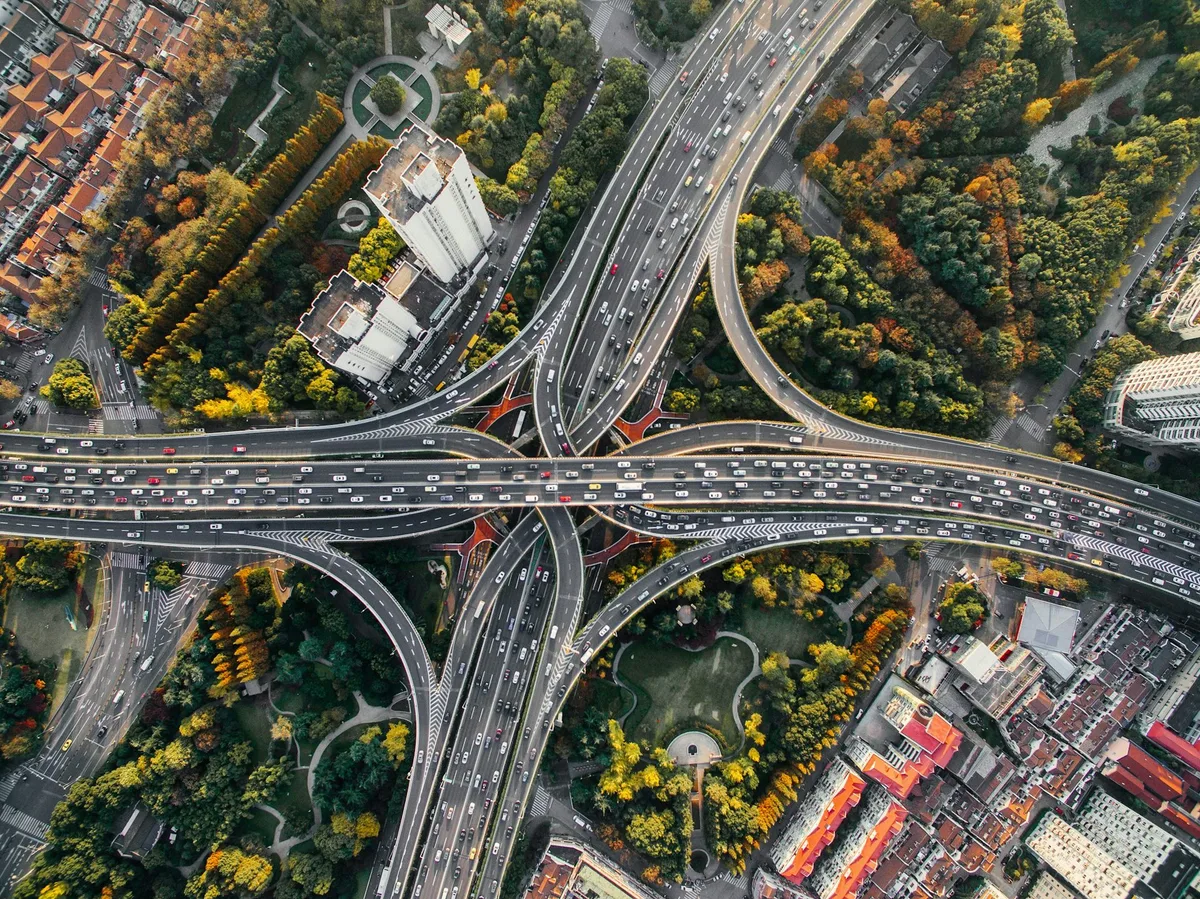
Denys Nevozhai / Unsplash Tackling traffic congestion is one of the biggest challenges facing large cities around the world.
When it comes to reducing congestion, one solution almost instinctively comes to mind: build more roads or widen existing ones.
But the science of transport economics has shown for decades that increasing road capacity does not necessarily translate into smoother traffic.
In fact, under certain conditions, it can do the opposite.
Here’s how it works.
A simple road network Let’s start with a very simple road network.
Suppose everyone in a town lives at the same origin (the start) and travels each morning to the same destination (the finish).
There are only two possible routes between them: the first route goes from the start to point A, then from A to the finish; the other goes via point B instead.
The roads from the start to B and from A to the finish are nice and wide, and take a constant 45 minutes regardless of traffic.
The roads from the start to A and B to the finish are narrower.
They take five minutes without traffic, but every 100 cars on the road adds an extra minute to the trip.
During the morning peak, 4,000 drivers go from the start to the finish each day.
The question is: how do the 4,000 commuters distribute themselves between the two routes? Finding equilibrium Transport scientists answer this using the concept of traffic equilibrium .
A road network is in equilibrium when no commuter can reduce their travel time by changing routes.
5News aggregated this summary from the outlet’s public feed. The full article, with all the context, is on theconversation.com — the content belongs to The Conversation Australia.