AFP chief calls for national ‘conversation’ amid drug-fuelled gang violence
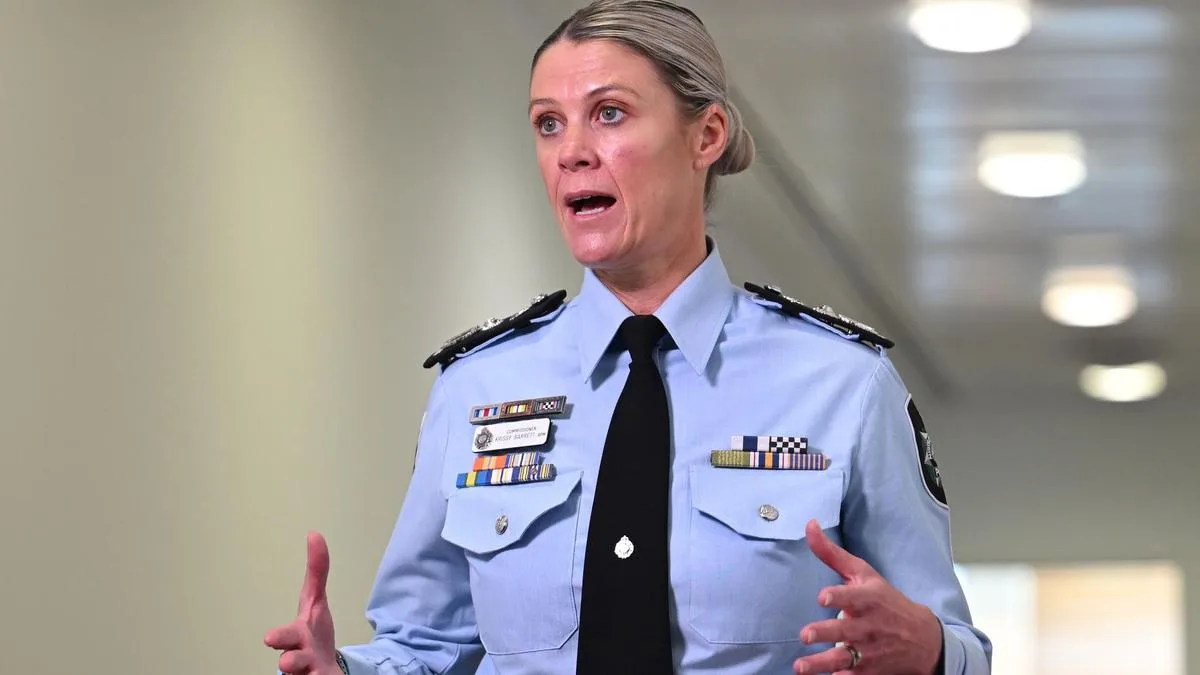
Innocents are being shot dead on Australian streets because of the country’s “insatiable appetite” for drugs, Australian Federal Police Commissioner Krissy Barrett says.
Gang violence has surged across Australia’s biggest cities in recent years, with Sydney experiencing the worst of it.
Transnational drug trafficking is driving the wave, according to police and researchers.
But Ms Barrett said on Tuesday the issue was far wider than many realised and called for a national conversation, warning that the organised crimes networks behind it were an evolving threat to national security.
“I want people to draw the connection between what they might see as everyday or accepted drug use and what we are seeing happen on the streets … the misidentification of people, innocent people that being shot – there is a correlation there,” she said.
“There is a correlation with young men who are being tasked to carry out these criminal acts.
The comments echoed an opinion piece by Ms Barrett that was published overnight.
She outlined key reasons Australia needed to have a conversation about drugs sooner rather than later, including that Australians were being exposed to “more potent and dangerous synthetic drugs being trafficked throughout the world”.
She also pointed to the “pace and scale” of artificial intelligence and “how organised crime can use AI to help evade law enforcement detection” and the “growing challenge of illicit commodities being sent to and through the Pacific”.
Trafficking through the Pacific has soared in recent years due to demand for cocaine in Australia and New Zealand.
Australian and international law enforcement agencies seized more than 17 tonnes in the region this year alone.
Originally published as AFP chief calls for national ‘conversation’ amid drug-fuelled gang violence
5News aggregated this summary from the outlet’s public feed. The full article, with all the context, is on www.perthnow.com.au — the content belongs to PerthNow.