Videos capture humpback whales stopping to snack as they migrate along Australia’s coast
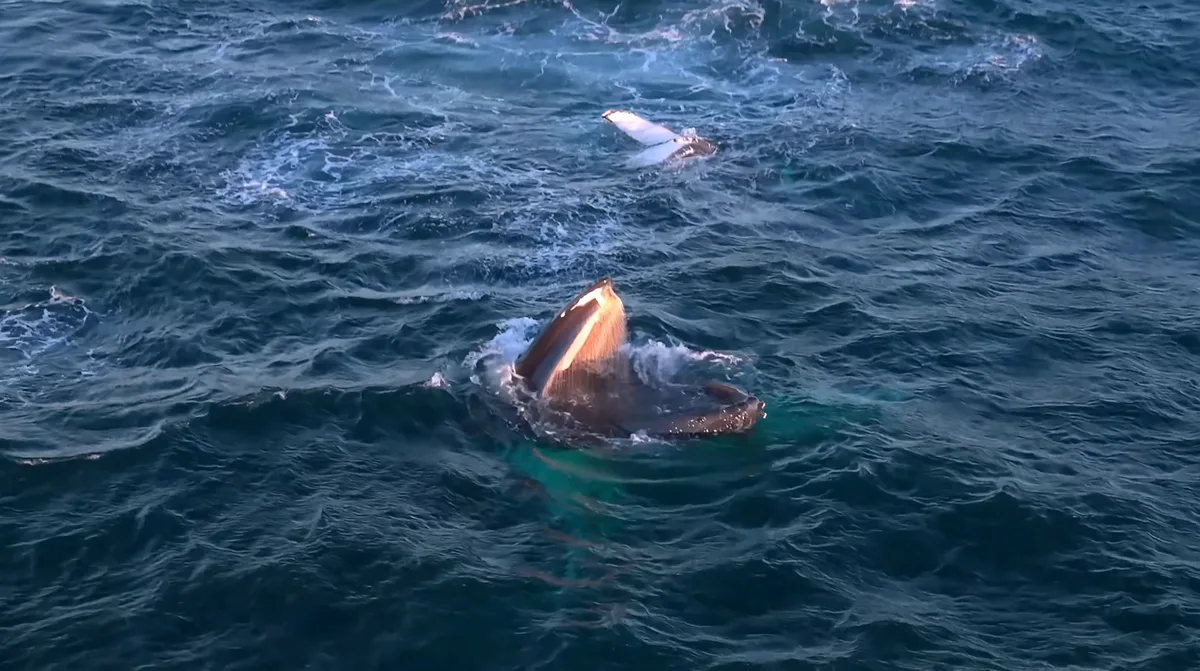
Drew Kelly/WildLive Media The southern humpback whale migration is in full swing.
Tens of thousands of whales are now making their journey from warm Australian waters in the north to their cold feeding grounds in Antarctica.
But snacking along the way provides much welcome replenishment.
In a new study , published in Marine Mammal Science, we have investigated feeding behaviour of humpback whales on the east coast of Australia using information from citizen science and social media.
We found that mid-latitude feeding is a common and widespread strategy amongst humpback whales.
This discovery challenges a long-held assumption about where and when whales feed.
And it could help us better protect these magnificent animals.
Feast or famine? For many years, humpback whales have been described as “ capital breeders ”.
This theory suggests that the whales spend summer feeding on krill in Antarctica to build up fat reserves, then travel thousands of kilometers to low-latitude breeding grounds to mate and give birth.
Warm tropical waters are nutrient poor, offering little opportunity to feed.
Historically, whaling and stranding records also supported this “feast or famine” theory, with the vast majority of humpback whales caught during mid-latitude migration in Australian waters having empty stomachs.
It was widely assumed that they relied solely on their fat stores to sustain their migration, mating, and the intense energetic demands of nursing newborn calves.
Screening the digital world for information Conducting long-term, large-scale systematic research surveys across thousands of kilometres of the Australian coastline isn’t feasible due to the huge cost involved.
Instead, like other researchers turning to public photos and footage , we sourced information about feeding events from social media.
5News aggregated this summary from the outlet’s public feed. The full article, with all the context, is on theconversation.com — the content belongs to The Conversation Australia.