After two decades, China is preparing its boldest Moon mission yet
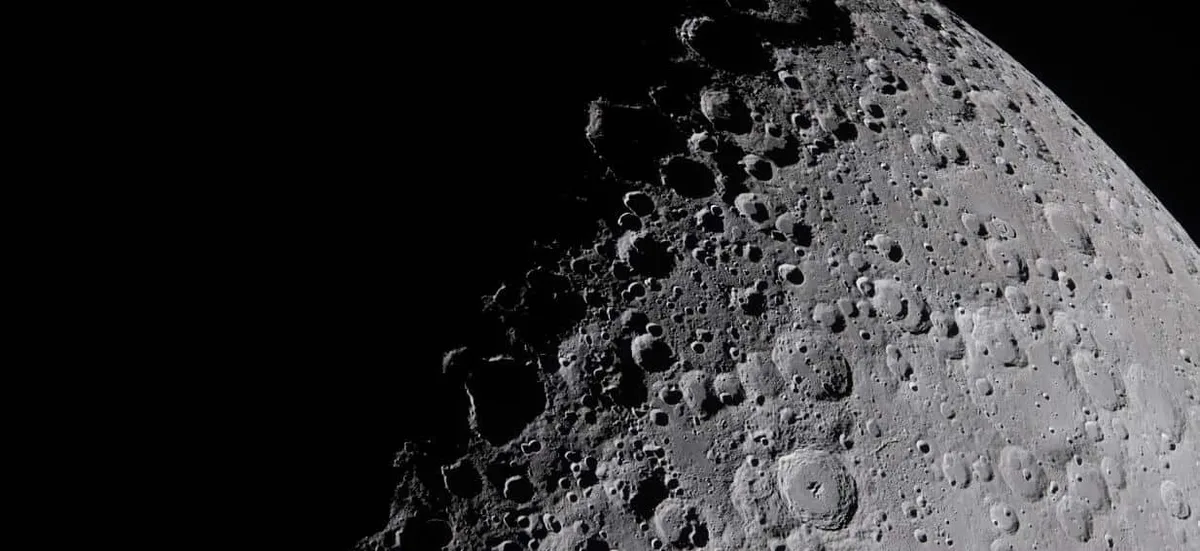
How do you explore a place where the Sun never shines? China’s space programme will soon embark on one of the most innovative lunar exploration missions in recent years.
We’ve known for nearly two decades that some form of water exists on the Moon. What we still don’t know is exactly how much accessible water ice lies inside permanently shadowed craters, how deeply it is buried or what form it takes.
What we do know is that accessing that water ice will be a real challenge: it is found at the bottom of deep, hard-to-traverse craters where the Sun never shines, remaining untouched for billions of years at temperatures well below –200C. These are among the most valuable places on the Moon, but the hardest to reach and explore.
Lunar exploration has come a long way since the Soviet Union’s Luna-1 probe reached the Moon’s vicinity in January 1959. The Apollo missions and their successors showed the challenge is no longer simply to reach the Moon. It is to explore places human and conventional rovers cannot easily go, and ultimately determine whether the Moon itself can provide some of the resources that future explorers will need.
China has spent two decades building an increasingly ambitious lunar exploration programme, named after Chang'e, the ancient Chinese goddess of the Moon. The Chang'e-7 mission is expected to set course for our celestial neighbour later this month, although a recent failure involving a different Chinese rocket has introduced some uncertainty over the launch date. Here’s what makes this latest mission so interesting.
Your trusted source for staying up-to-date with the world around you. Get free daily news updates and analysis, straight to your inbox.
The mission will test several novel approaches to lunar exploration. It will consist of an orbiter, a lander, a rover and a hopper.
In addition, the Queqiao-2 lunar relay satellite is already in place. Launched separately in March 2024, it subsequently supported the Chang'e-6 mission and will facilitate communication between Earth and the lunar surface during the Chang'e-7 mission.
We don’t know precisely where the mission will land, but a site on or near an illuminated ridge close to the Shackleton crater in the Lunar South Pole’s Aitken region is a prime candidate.
The hopper will be the mission’s real star. Unlike a wheeled rover, it’s designed to leap over broken terrain and descend into craters where sunlight never reaches, places conventional vehicles may simply be unable to enter.
Adding it to the mission makes sense, given the steep crater walls, broken terrain, permanent shadow and the need for autonomous navigation and communications.
hinese scientists won’t be looking for signs of water; we already have compelling evidence for lunar polar water. The question at the mission’s core is where exactly that water is located, in what form and concentration, and whether it could realistically be accessed.
This marks a transition from simply exploring the Moon to determining whether its resources can actually be used.
Other nations are similarly interested in addressing that same question.
5News aggregated this summary from the outlet’s public feed. The full article, with all the context, is on www.sbs.com.au — the content belongs to SBS News - Latest.