AARON PATRICK: Donald Trump and Anthony Albanese both have a problem with their central banks
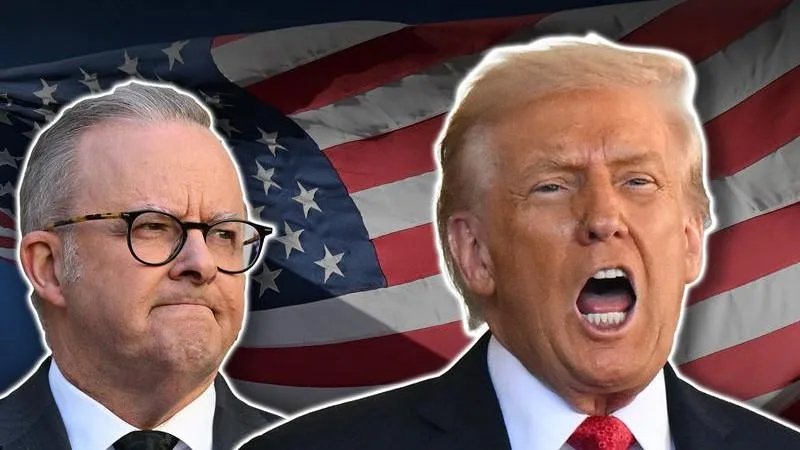
President Donald Trump greeted America’s first interest rate rise in three years this morning by lashing out at the world.
The US could stop trading with any country that sells more to the US than it buys, he said, as part of a complaint about the Federal Reserve’s decision to move rates up to 3.75 per cent to 4 per cent.
“Interest Rates in the United States should be 1%, or less, because we are the Best Credit in the World — BY FAR,” he wrote on Truth Social.
“If we stopped Trading with every country that we have a Deficit with, which is most of them, we would make, at least, 1.5 Trillion Dollars a year. The word ‘Deficit’ is nothing more than a fancy word for LOSS. We are ‘carrying’ almost every country in the World, and that cannot go on any longer.”
Australia runs a trade deficit with the US, thanks to the popularity of Netflix, Apple and other big American exporters, and is therefore less likely to upset the President.
More importantly for Australia and the world, the decision shows that new Federal Reserve chairman Kevin Warsh is willing to defy political pressure. By using interest rates to control inflation, which is at 3.4 per cent in the US, he may be able to limit the financial pressures spreading around the global economy, exacerbated by the conflict in the Middle East.
“This reaffirms that the Fed is going to be focused on inflation and that is going to take a degree of volatility and uncertainty out of the markets,” says Jonathan Kearns, the chief economist at Challenger Investment Management.
Despite what economists considered long-term good news, US shares fell about 0.4 per cent. That’s because higher rates lower the value of dividends in the future, making shares less valuable.
Last week the dollar was above US72¢. After the Fed’s decision, it was just under US71¢, a sign of how interest rate differences between countries influence currencies. For travellers, visiting the US just got a little more expensive.
The two countries face similar inflation challenges. This week demonstrated that both their governments, in different ways, like to shift blame for economic pain to their central banks.
President Trump accuses the Federal Reserve of keeping rates higher than they need to be. Anthony Albanese implies the Reserve Bank of Australia is contributing to higher prices by making loans more expensive.
“We understand that Australians are under cost-of-living pressure and that includes the impact of decisions that are made by the independent Reserve Bank,” Mr Albanese told Parliament on Wednesday during question time.
What the Prime Minister did not explain is why the Reserve Bank has raised rates three times this year, a painful process designed to kill an inflation breakout. Inflation hit 3.5 per cent on an annual basis in July.
Rising prices are caused by too much money flowing around the economy, a problem exacerbated by the Albanese government’s deficits. By conflating the existence of inflation with the cure, Mr Albanese misleads Australians and undermines respect for the Reserve Bank.
5News aggregated this summary from the outlet’s public feed. The full article, with all the context, is on www.perthnow.com.au — the content belongs to PerthNow.