From emergency to new normal: How Labor supercharged use of contingency funding for major projects
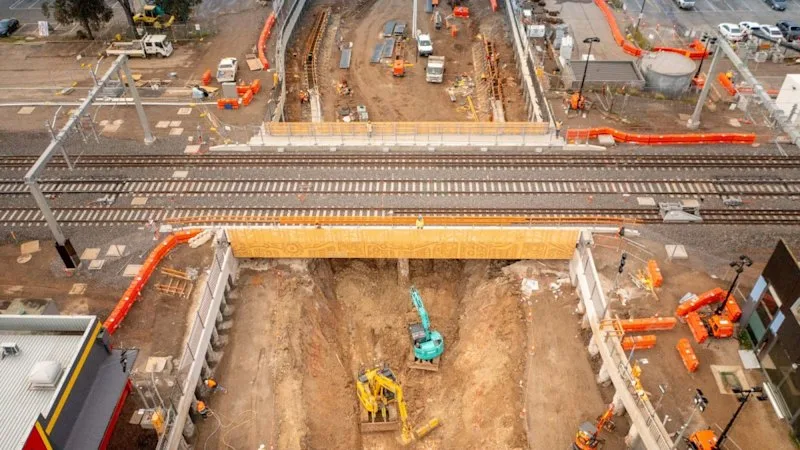
Opposition Leader Jess Wilson has pledged to overhaul the way the state government funds and accounts for major infrastructure projects as a step towards restoring integrity to Victoria’s finances if the Coalition is elected on November 28.
Documents obtained under freedom-of-information laws reveal that former treasurer Jaclyn Symes last year approved $13.5 billion in “budget supplementation” measures so the Labor government’s cash-strapped departments could pay their bills.
The extraordinary sum included $11.2 billion of Treasurer’s Advances – a contingency fund which effectively serves as the state’s credit card – as well as the reinstatement of $1.8 billion of previously withdrawn funding, and a separate “temporary” advance of $466 million from another little-known contingency provision.
It meant that for the 2024-25 financial year – the most recent for which we have fully reconciled and published results – about 13¢ of every public dollar spent was accounted for outside the budget.
This continues a Victoria-only practice, which was established early in the life of the Andrews government and supercharged through the pandemic years, of using Treasurer’s Advances – a contingency traditionally reserved for emergencies – to pay for major projects, other capital expenditure and government programs.
The revelation prompted Wilson to declare that under a Coalition government, Treasurer’s Advances would not be used to make regular payments to projects like the Suburban Rail Loop and removing level crossings and would revert to their original purpose of meeting urgent and unforeseen expenses.
“That is not what Treasurer’s Advances are designed to be used for, and they shouldn’t be used for that purpose,” Wilson told The Age .
“Returning financial integrity to Victoria is a legacy that I want to leave for this state. We need to bring greater transparency back to the budget so that people can have confidence in how the government is spending their money.”
RMIT University public policy expert Professor David Hayward said the partly redacted ministerial brief, dated a week before the end of the 2024-25 financial year, showed how approval of, and oversight over, public expenditure had shifted from parliament to the treasurer.
Hayward said he had questioned former treasurer Tim Pallas and former treasury secretary Chris Barrett about why Victoria had adopted such a broad use of Treasurer’s Advances, but neither had provided a compelling explanation.
“When you look at the list of items that are covered, it doesn’t make a lot of sense to me,” he said.
“It is crucial that parliament approves how government money is spent. That doesn’t happen if a big block of money is just parceled out as the treasurer sees fit. That breaks down the whole principle of parliamentary accountability.”
Hayward said there was no suggestion of fraud or misuse of funds, but noted, “It’s about good process in the context of parliamentary democracy.”
Since becoming leader in July, Ben Carroll has staked his premiership on promoting greater integrity in government.
5News aggregated this summary from the outlet’s public feed. The full article, with all the context, is on www.watoday.com.au — the content belongs to WAtoday.