The NSW public schools where parents pay the most and least revealed
Parent financial contributions to the state’s public schools have shrunk by millions of dollars in the past year, while principals face $10,000 credit card transaction limits as part of finance reforms they say signals a lack of trust in their leadership.
Voluntary contributions paid to public schools fell $4.5 million to $26.2 million last year, but selective schools and those in Sydney’s wealthiest suburbs are still receiving hundreds of thousands of dollars each year from parents.
Department of Education secretary Murat Dizdar has capped requests at $110 a year for secondary students and $51 for primary students since 2024 to address the cost-of-living squeeze, but schools already asking above the caps were not affected.
Parents’ payment for subject contributions also declined by $3.6 million to $37.2 million over the same period, according to data released by the NSW Department of Education.
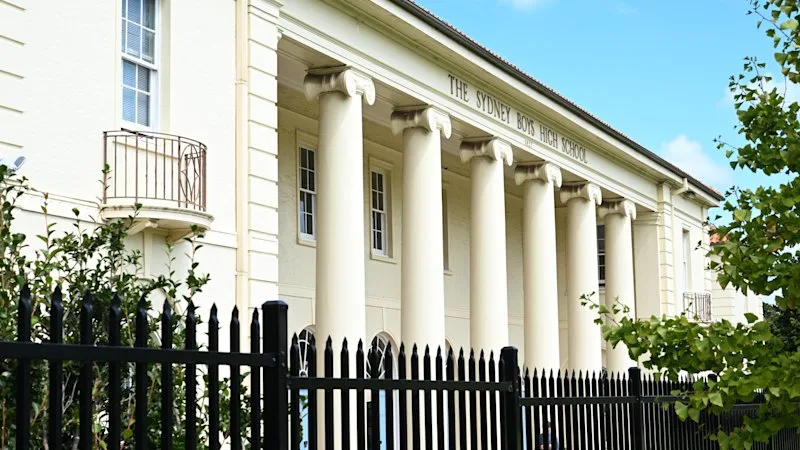
Selective Sydney Boys High School raised the most of any public school at $1.1 million, followed by Yanco Agricultural High School, which raised nearly $505,000. Comprehensive school St Ives High collected $468,000 in parents’ contributions. Balgowlah Heights Public raised $325,000 – the most of any primary school.
The statewide decline in parent contributions comes after NSW government signed a historic $4.8 billion deal with the Commonwealth to fully fund public schools .
It will take more than a decade for schools to receive 100 per cent of the estimate required to educate the school population, known as the schooling resource standard. NSW schools are this year receiving 95 per cent of the SRS, as the state contributes 75 per cent and the Commonwealth a further 20 per cent.
Education Minister Prue Car said: “Providing every child with access to a world-class public education is the responsibility of government.”
Under rules rolled out last month, principals must seek approval before submitting purchase orders over $10,000, while there are $10,000 departmental credit card transaction limits, in line with NSW Treasury guidelines.
Dizdar said principals took their stewardship of public funds seriously and ensured resources were directed to classrooms, where they make the greatest impact.
“This maintains the confidence of our communities and upholds strong accountability across the system,” he said.
NSW Primary Principals’ Association president Michael Burgess said his organisation had provided strong feedback to Dizdar due to the perception that these changes “reflect a lack of trust in principals, and the risks of a one-size-fits-all approach”.
“The changes to spending limits will particularly impact larger schools and new schools, where the complexity and scale of expenditure can be significantly different,” he wrote in August.
He said while principals at small schools would almost never have to spend more than $10,000, in larger primary schools, payments for stationery and textbooks could tip over that amount.
5News aggregated this summary from the outlet’s public feed. The full article, with all the context, is on www.brisbanetimes.com.au — the content belongs to Brisbane Times.